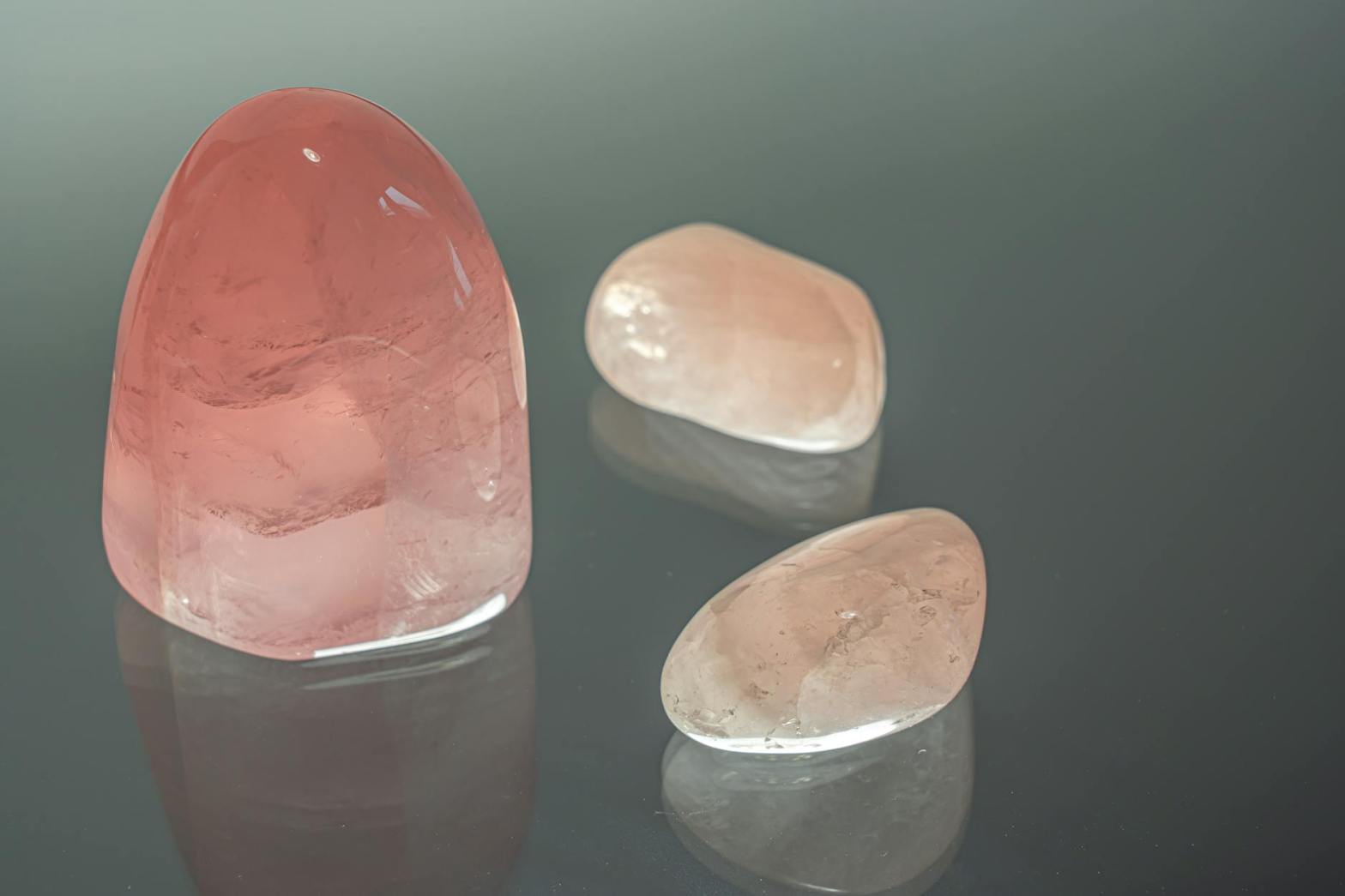
Rose Quartz – A remedy for the emotional heart

Rose quartz, has always been associated with the theme of love, in one way or another. It has even been referred to as the stone of universal love, and has been likened to a symbol of beauty, gentility and peace, to harmony and balance, the heart and healing.

It is a stone said to balance the heart chakra, to open the heart to giving and receiving unconditional love, and to connect with and extend self-love.

Kindness, compassion and empathy are keywords, and someone ‘in-tune’ with Rose quartz is gentle, emotionally balanced, calm, strongly inclined towards positivity, and exudes a subtle loving and healing energy.

As a homeopathic remedy, Rose quartz is a healer of the emotional heart. All types of heartache from emotional trauma, unrequited love, disappointment, separation or loss, respond very well to Rose Quartz. It is a remedy for grief where, for example, the love to a married person, is not answered. There is a strong feeling of responsibility towards loved ones lying on the shoulders of people needing this remedy. It is also a remedy indicated where there is an unhealthy addiction to a love relationship, and it is helpful in releasing the trauma from sexual abuse.

It’s need can also bee seen where children, who suffer from parental conflict in the home, want to please and appease both their mother and father in, for example, a family where a divorce is looming. These children are stressed and in a constant state of anxiety.

Rose Quartz purifies and harmonizes, and promotes self-love and inner healing.

A true remedy of and for love.

Homeopathy for Anxiety & Shock

What to do if things fail to go to plan, and troubling incidents, disturbing experiences or startling events cause disquietude, shock or feelings of anxiety?

Even worry can lie heavily on the mind, and may cause emotional upheaval and distress. In such cases it is good to know that there are homeopathic remedies at hand that may be helpful in calming the mind and easing the symptoms.

Below are a number of homeopathic remedies that can help restore balance where feelings and emotions related to anxiety or shock have disrupted the inner calm.

Aconitum napellus: In the event of sudden and very severe onset of a state, Aconitum is the first remedy to give. This can be the case where an incident shocks, or produces great anxiety, as for example following an accident, an injury, or an uncomfortable experience. Any event that happens without a warning calls for Aconitum. The individual is tense, anxious, greatly nervous, restless, excited and irritated. There is a disposition of the individual to want to walk away from the situation or place of anxiety.

Arnica montana: Arnica is indicated for the effects from mental strain and shock. As such also for shock that come from injuries, in particular those to the head. It is also a remedy that can be useful when someone is fearful of and easily frightened by nightmares, and when shocking incidents lead to nightmares. The individual may act gloomy, wants to be left alone, not to be talked to, not to be touched.

Gelsemium sempervirens: Shock, fright, fear or other emotional excitement, as from the receipt of bad news for example, can lead to ill effects, even physical ailments. There is great weakness, on the physical and mental level. Ahead of any challenges, upcoming exams or anticipated excitement, as for example in stage fright, the individual may exhibit symptoms such as weakness, an increased need to pass urine, diarrhoea and trembling. In this state it is difficult to think or concentrate. Quiet and to be left alone helps an individual most in such a case.


A common OTC remedy helpful in bringing about calm and ease to the mind is :

*Rescue-remedy: Rescue-remedy is not a homeopathic remedy. Rescue is the most widely known remedy of the Bach flower essences. A complex preparation of 5 different flower remedies: Impatiens, Star of Bethlehem, Cherry Plum, Rock Rose, and Clematis. This combination is an emergency formula intended to provide relief, and enable immediate treatment in cases of crisis, trauma and stress. It is indicated in states of impatience, frustration, agitation, shock, fear, and panic. As such it can be used to relief of anticipated fear, nervousness, tension, tantrums, confusion, or trauma. It relaxes, calms, lowers stress, and revitalizes. It is a distinct Bach-flower essence combination that can be purchased at health food stores. For directions of use, please consult the package insert!

‘Traumeel’ a complex prescription – efficacious for the treatment of sports-injuries

Traumeel is a homeopathic complex preparation indicated for use in the treatment of trauma and injuries contracted in the process of physical activity [1]. It matches, in a broader sense, the symptomatology that may result from the conduction sports.

Traumeel is one of the most extensively researched homeopathic formula [2]. Trials and studies investigating the efficacy of Traumeel came to conclude that it can in fact be described as the ‘Diclofenac’ of homeopathy [3]. It´s treatment effect, tolerability and compliance, have been found to be equivalent, if not superior to that with conventional non-steroidal anti-inflammatory drugs, as is for example ‘Diclofenac’ [4, 5, 6].

Traumeel is a protected brand, manufactured by Heel. It is a composition of 14 natural extracts that have been homeopathically potentised to decimal dilutions, or are included in the concoction as mother-tincture [7]. These components in combination are stronger than the single constituents when used separately [8]. Traumeel is marketed as a topical ointment or gel, injections, and for oral administration as drops or tablets. [8].

As a complex preparation Traumeel cannot be classed as a classic homeopathic medication. Complex formulations are designed to be prescribed in a generalized manner and do not follow the doctrine of individualization that is paramount in classical homeopathic prescribing. The aim of such poly-remedy prescribing is for the treatment compound to match the broad spectrum of symptomatology expressed for a specific condition [9].

Traumeel is used for the alleviation of limitations caused by pain and inflammation in muscular tissue and joints, and is as such indicated for musculoskeletal conditions that affect all major joints, the back, neck, foot, knee, arms etc.. The treatment with Traumeel is effective, gentle, and devoid of adverse effects [8].

References:

[1] Orchard, J., Best, T., Mueller-Wohlfahrt, H-W., Hunter, G., Hamilton, B., Webborn, N., Jaques, R., Kenneally, D., Budgett, R., Phillips, N., Becker, C. & Glasgow, P. (2008) ‘The early management of muscle strains in the elite athlete: best practice in a world with a limited evidence basis ‘, British Journal of Sports Medicine, 42(3), pp. 158-159 [Online]. Available at: doi:10.1136/bjsm.2008.046722 (Accessed: November 2009).

[2] Bemm, T. (2009) Leistungssteigerung mit der Homöopathie, Available at:http://www.aponeo.de/themenwelt/bewegung-und-sport/homoeopathie-im-sport/beitraege/leistungssteigerung-mit-der-homoeopathie/ (Accessed: April 2013).

[3]  DZS (2009) Individuell trainieren – Prof.Dr. P. Billigmann im Interview zum Thema Fussball, Available at: http://www.zeitschrift-sportmedizin.de (Accessed: March 2010).

[4]. Birnesser H, Oberbaum M, Klein P, Weiser M. (2004) The homeopathic preparation Traumeel S compared with NSAIDs for symptomatic treatment of epicondylitis. Journal of Musculoskeletal Research, 8(02n03),119-128 [Online]. Available at: doi: 10.1142/S0218957704001284 (Accessed November 2009).

[5]. Schneider C, Klein P, Stolt P, Oberbaum M. (2005) ‘A homeopathic ointment preparation compared with 1% Diclofenac gel for acute symptomatic treatment of tendinopathy’. Explore, 1(6), pp.446-452 [Online]. Available at: doi: 10.1016/j.explore.2005.08.010 (Accessed: November 2009).

[6] Gonzalez de Vega,C., Speed,C., Wolfarth, B., Gonzalez, J. (2013) ‘Traumeel vs. diclofenac for reducing pain and improving ankle mobility after acute ankle sprain: A multicentre, randomised, blinded, controlled and non-inferiority trial’, The International Journal of Clinical Practice, 67(10), pp. 979-989 [Online]. Available at: doi: 10.1111/ijcp.12219 (Accessed: January 2016).

[7] Heel (2009) Gebrauchsinformation Traumeel S, Available at:http://www.heel.de/upload/Traumeel_S_Tabl_K_014558_03_BPZ_7_1564.pdf(Accessed: January 2016).

[8] Heel (n.d.) Traumeel, Available at: http://www.traumeel.com/Traumeel-com-Home.html?ActiveID=10008080 (Accessed: January 2016).

[9] Pflüger (n.d.) Homöopathische Komplexmittel, Available at:http://www.homoeopathie.de/komplexmittel.html (Accessed: April 2013).

Arnica – a must have homeopathic remedy the active individual (w. DD.)

One major remedy for the effects of sports-injuries or such afflictions caused by physical activity, external, or mechanical impact is Arnica. Trauma, bruises, or strains caused by heavy lifting, falling, or shock; concussion, contusion, sprains, or dislocation belong to this group. Hematoma, haemorrhage and wound healing, over-exertion and delayed-onset-muscle-soreness are also indicated symptoms, and Arnica has marked characteristics that match such affections.

One principal aspect pertaining to Arnica is the sensation of pain that feels as if beaten and bruised. The aggravation of Arnica symptoms occurs due to talking, blowing the nose, touch, jolting, movement and slightest noise. The Patient generally feels worse in the evening or at night. Humid cold disagrees with this patient. There may be fainting following a mechanical impact or injuries and there is a generalized decline of strength and fatigue, a battered feeling throughout the body. The entire body may feel painfully oversensitive. There is a general restlessness. The patient may be fearful and irritable.

There may be the sensation of heat and burning in the head with coldness of the body. The Arnica face may have pronounced redness, burning, heat, shining swelling and hardness of just one cheek. While the head and face are heated or hot, the body is cold. Arnica easily suffers of nose-bleed.

Where there is inflammation Arnica is indicated for over-sensitiveness experienced in the entire body, a feeling of being battered, pain, general restlessness, irritability and fear.

The sore excoriation of skin, swelling that is hot, hard and red, as well as frostbites react to Arnica. Joints feel as though they are sprained. Strains and Sprains show redness, pain and restricted mobility, and there may be swelling and heat of the affected part (also Rhus toxicodendron). Hematoma of the skin may be of discoloration red, bluish, yellow, green or black. For wound healing Calendula may be indicated besides Arnica. Topical applications of Arnica are indicated for localized injuries, scalds and burns, incisions, lacerations fractures and bruises and muscle soreness.

In concussion of the brain, the pain in the head is concentrated over one eye, and there may be vomiting that is greenish in color. If in such cases Arnica fails, Cicuta virosa may benefit the patient.

Back pain or straining of the back, or of the chest and loins may feel bruised or as of a dislocation. In injuries to the chest Arnica in alternation with Aconitum may be serviceable. There may be a sensation of rawness, and weakness of the muscles in the neck that cannot support the head sufficiently causing it to fall backwards.

The extremities may have symptoms of pain that feel as of a dislocation or as from great fatigue. Stiffness of the limbs, weariness and muscular jerking may be present after physical exertion. There is great soreness that may be paired with the acute sensation of tension and stretching in the lower limbs. The affected area, legs and feet, or joints may have a crawling or tingling sensation, or a prickling feeling from without inward. In the upper limbs, the joints, wrists, hands and arms may feel sore, as if sprained or dislocated, with a tingling sensation, pins and needles.

In the knee there may be tension pain, as of a contraction of the tendons, and failing strength in the knee-joint when walking, almost paralytic (also in the hip). The knee may be pale and swollen. Movement aggravates the pain. If the big toe is affected, it may be painful, hot, hard and swollen, leaving the skin shining.

In contusions there is a battered feeling, which may be paired with restlessness in contortion and sprain. Besides Arnica, Helianthus anuus may be of use in contusion. In dislocation and luxation there may be violent pains, swelling, and impaired mobility where the extremity is deformed or has an altered direction, here Aconitum may follow Arnica for relief pain. In tennis elbow Arnica is indicated, as well as Ruta. In fractures, Arnica may be followed by Symphytum and Ruta to promote healing of the broken bone.

References:

  • Beuchelt H. Praxis der wissenschaftlichen Homöopathie. Leipzig: Georg Thieme, 1949.
  • Boericke W. Homeopathic materia medica and repertory. Delhi: B. Jain Publishers Pvt. Ltd., 2004
  • Clarke J. A dictionary of practical materia medica. New Delhi: B. Jain Publishers Pvt. Ltd., 1994.
  • DHU (2011) Homöopathisches RepetitoriumKarlsruhe: Deutsche Homöopathie Union.
  • Laurie J. Elements of homeopathic practice of physic. [Internet] 2005 [cited 2013 December 22]. Available from http://quod.lib.umich.edu/h/homeop/
  • Millard H. A guide for emergency, containing the homoeopathic treatment… [Internet] 2005 [cited 2013 December 22]. Available from http://quod.lib.umich.edu/h/homeop/
  • Morgan L. Homeopathic treatment of Sports injuries. Vermont: Healing Arts Press, 1988.
  • n.a. (1880) The principal uses of the sixteen most important and fourteen supplementary homoeopathic medicines . archive.org [Online]. Available at:https://archive.org/details/principalusesofs00lond (Accessed: April 2016).

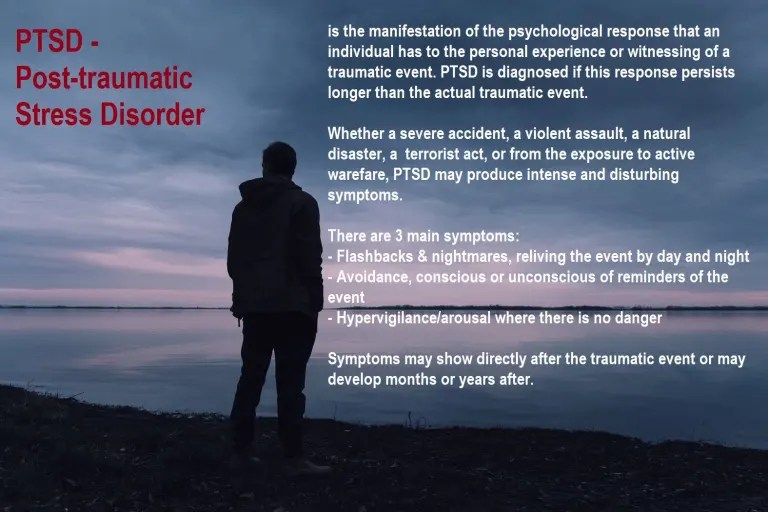
Is Homeopathy something that can help with PTSD? The ‘Totality’ is key!

Homeopathy has to date been little investigated for its efficacy in the treatment of PTSD. However, states of anxiety, depression, panic, trauma, fear, irritability, sleeplessness, and mental and physical distress have long found relief by homeopathic treatment. 

Homeopathy is a medicinal treatment considered as complimentary to conventional medicine. It is tailored to treating the individual in all of his or her entirety, holistically, and not just a disease or its label.

Homeopathy treats the patient on all levels, the spiritual, the mental/emotional and the physical plane; on specifically those planes on which the symptoms of PTSD are manifest and expressive.

Homeopathy is considered a ‘gentle’ treatment approach as it’s remedies are produced by diluting and rhythmically shaking them at various stages of the production process. This renders their action gentle and increases their strength. Homeopathy is considered devoid of side effects and adverse reactions.

In the homeopathic consultation the patient is given the space for him or her to fully express how he or she feels, and how he or she experiences the symptoms of his or her complaint. The aim is to provide a comfort zone within which the practitioner is able to identify from the patients narrative and explanations, the remedy which best fits the presenting state of the patient.

Particularly within the symptom complex of ‘Post-traumatic Stress Disorder’, there is a ‘mind – body’ connection. It is not infrequent that sufferers of PTSD develop comorbid complaints to their diagnosis of PTSD, such as chronic physical pain, cardiovascular disease, gastrointestinal disorders and other health issues.

By considering the totality of the patient, taking into account the physical, mental and emotional presentation of complaints, Homeopathy can facilitate the reinstatement of well-being and the recovery of the individual as a whole. Homeopathy is one of the CAM therapies who´s action radius strongly recommends it for the treatment of PTSD.

Homeopathy is ‘gentle help’ for PTSD!

Homeopathy is a treatment that promotes self-healing!

Mahatma Gandhi (1869 – 1948), the distinguished leader of the liberation movement in India, said of homeopathy that “it cures a larger percentage of cases than any other method of treatment, and it is beyond all doubt safer and more economical and the most complete medical science…”.

Homeopathy is one of the healthcare approaches referred to as complementary or alternative, as opposed to the established conventional medical system of healthcare. It was developed in the 19th century by the German doctor Christian Samuel Hahnemann (1755-1843). It strongly differs from conventional medicine in that it is a holistic treatment that views each patient as unique and takes into account his or her personal environment. Homeopathy considers the symptoms of disease of a patient on the mental, the emotional, and the physical plane. It does not just treat a given disease label, or the part of the body that appears ill. It aims to heal the root cause of disease.

The homeopathic concept presupposes that disease can only occur if the body’s own defenses are compromised or weakened. The appearance of symptoms is considered a reaction of the healing forces of the body promoting recovery from illness. Homeopathic remedies are aimed at stimulating these inherent self-healing forces.

The treatment with remedies that are ultra-highly diluted is a prime tenet of homeopathy. They are produced from minute amounts of medicinally valuable substances of herb, mineral and animal origin. The ultra-high dilution establishes the homeopathically effective quality of the medicinal substances, removes their toxicity, makes their action gentle and increases their effect. This process is called potentization, or dynamisation, and involves serial dilution and succussion. Succussion describes the rhythmical shaking of the diluted substance at different stages of the production process.

The second main premise of homeopathy is the principle ‘like cures like’. This means that symptoms of illness can be treated with a remedy that would produce similar symptoms if it was taken by a healthy person. For example, when cutting onions one is likely to get runny eyes and a sniffy nose. Hence, following the homeopathic principle, a homeopathic remedy made from the onion can be used to relieve hay fever that produces such similar symptoms. Likewise, Coffee that is stimulating and can cause sleeplessness, will do the opposite in the form of a homeopathic remedy. Hence the remedy ‘Coffea cruda’ is used to treat insomnia and nervous excitement.

Homeopathy today enjoys worldwide popularity and extensive use. In Europe approximately 100 million people use homeopathy. It is practiced in 40 of 42 European countries. According to the World Health Organization, over 500 million people rely on it worldwide. Next to conventional medicine it has become the second most used system of medicine in the world.

Patients appreciate and use homeopathy because they value its holistic approach, and can relate to the concept of self-healing forces. Many praise it because it is non-toxic and practically devoid of adverse-effects, and many more people rely on it because it has helped them recover from illness.