Concussion – a sports- or accident -injury

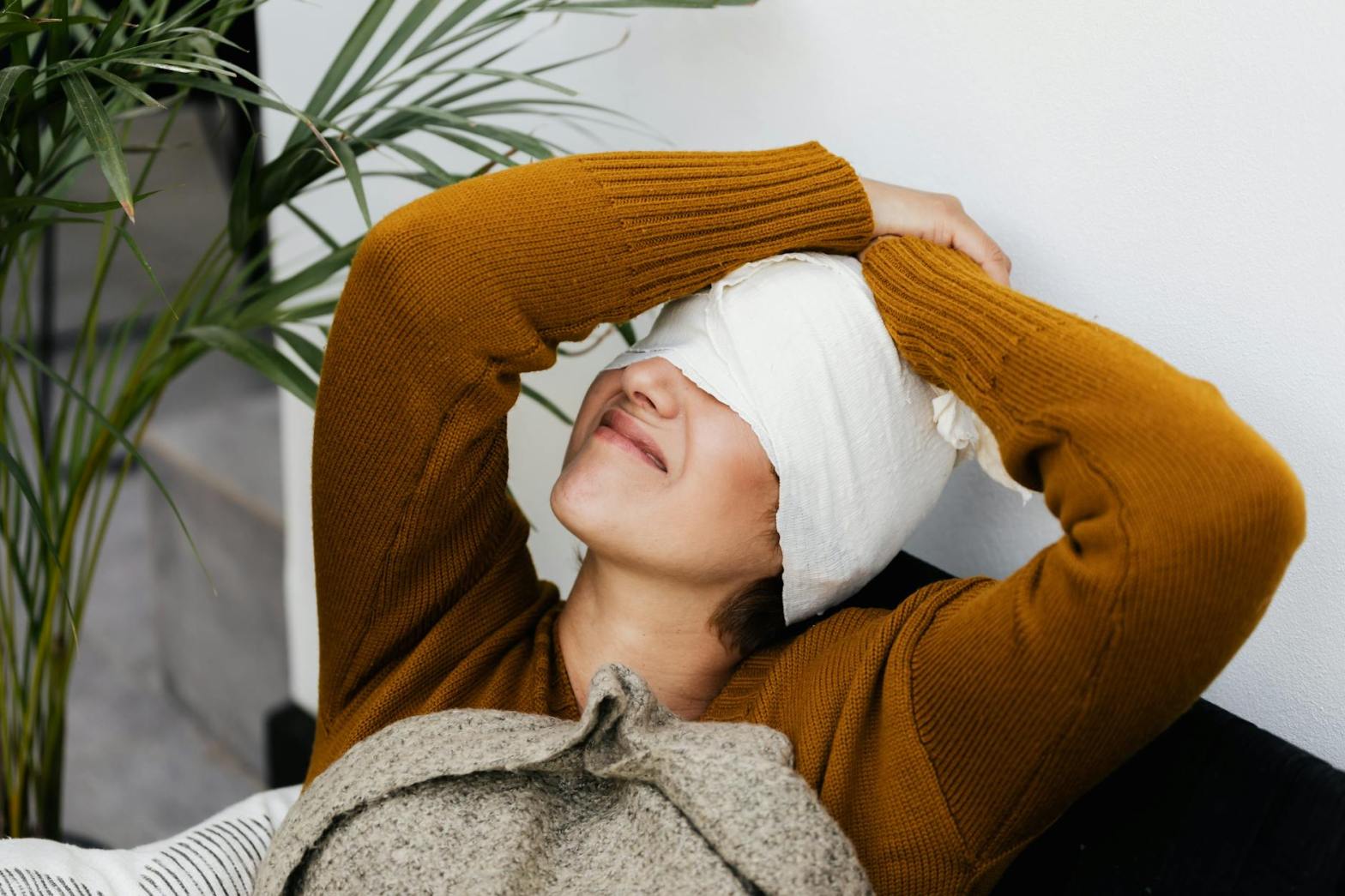
Concussion can occur in the process of many physical activities, whether they are conducted for leisure or for a wage, whether an amateur or a pro. A concussion is a traumatic injury to the brain caused by a sudden acceleration, rotation or shaking of the head. This causes a forward and backward motion of the brain inside the skull.

Processes and functions of the brain are temporarily compromised and the patient may feel confused, show impaired coordination, balance or speech, and may experience memory loss for some time. A patient may also lose consciousness due to a concussion. Other, early indicative symptoms are headache, nausea, dizziness and drowsiness.

It is important to note that symptoms may not appear directly after the injury is contracted, they may be delayed for several days before they are noticed. Recovery from a concussion requires several days, yet repeated concussion may have lasting impact. Physical and mental rest, until symptoms have subsided, is key to recovering from this injury. Only a gradual return to activity is recommended, darting too fast into physical exertion may bring symptoms back.

Homeopathic remedies may support the recovery from concussion. The following remedies may be helpful in relieving the symptomatology:

Arnica, Belladonna, Glonoinum, Cocculus, Hypericum, Ledum, Nat.mur., Nux vom., Rhus tox., Spigelia

References:

  • American Academy of Orthopaedic Surgeons (2016) Concussion, Available at: http://orthoinfo.aaos.org/ (Accessed: June 2016).
  • Boericke, W. (2004) Pocket manual of homeopathic materia medica and repertory New Delhi: B.Jain publishers Ltd.
  • Clarke, J. (1994) A Dictionary of practical materia medica New Delhi: B.Jain publishers Ltd.
  • Morgan, Lyle (1988) Homeopathic treatment of Sports Injuries, Rochester: Healing Arts Press.
  • Walker, Brad (2007) The Anatomy of Sports Injuries, Chichester: Lotus publishing.

‘Traumeel’ a complex prescription – efficacious for the treatment of sports-injuries

Traumeel is a homeopathic complex preparation indicated for use in the treatment of trauma and injuries contracted in the process of physical activity [1]. It matches, in a broader sense, the symptomatology that may result from the conduction sports.

Traumeel is one of the most extensively researched homeopathic formula [2]. Trials and studies investigating the efficacy of Traumeel came to conclude that it can in fact be described as the ‘Diclofenac’ of homeopathy [3]. It´s treatment effect, tolerability and compliance, have been found to be equivalent, if not superior to that with conventional non-steroidal anti-inflammatory drugs, as is for example ‘Diclofenac’ [4, 5, 6].

Traumeel is a protected brand, manufactured by Heel. It is a composition of 14 natural extracts that have been homeopathically potentised to decimal dilutions, or are included in the concoction as mother-tincture [7]. These components in combination are stronger than the single constituents when used separately [8]. Traumeel is marketed as a topical ointment or gel, injections, and for oral administration as drops or tablets. [8].

As a complex preparation Traumeel cannot be classed as a classic homeopathic medication. Complex formulations are designed to be prescribed in a generalized manner and do not follow the doctrine of individualization that is paramount in classical homeopathic prescribing. The aim of such poly-remedy prescribing is for the treatment compound to match the broad spectrum of symptomatology expressed for a specific condition [9].

Traumeel is used for the alleviation of limitations caused by pain and inflammation in muscular tissue and joints, and is as such indicated for musculoskeletal conditions that affect all major joints, the back, neck, foot, knee, arms etc.. The treatment with Traumeel is effective, gentle, and devoid of adverse effects [8].

References:

[1] Orchard, J., Best, T., Mueller-Wohlfahrt, H-W., Hunter, G., Hamilton, B., Webborn, N., Jaques, R., Kenneally, D., Budgett, R., Phillips, N., Becker, C. & Glasgow, P. (2008) ‘The early management of muscle strains in the elite athlete: best practice in a world with a limited evidence basis ‘, British Journal of Sports Medicine, 42(3), pp. 158-159 [Online]. Available at: doi:10.1136/bjsm.2008.046722 (Accessed: November 2009).

[2] Bemm, T. (2009) Leistungssteigerung mit der Homöopathie, Available at:http://www.aponeo.de/themenwelt/bewegung-und-sport/homoeopathie-im-sport/beitraege/leistungssteigerung-mit-der-homoeopathie/ (Accessed: April 2013).

[3]  DZS (2009) Individuell trainieren – Prof.Dr. P. Billigmann im Interview zum Thema Fussball, Available at: http://www.zeitschrift-sportmedizin.de (Accessed: March 2010).

[4]. Birnesser H, Oberbaum M, Klein P, Weiser M. (2004) The homeopathic preparation Traumeel S compared with NSAIDs for symptomatic treatment of epicondylitis. Journal of Musculoskeletal Research, 8(02n03),119-128 [Online]. Available at: doi: 10.1142/S0218957704001284 (Accessed November 2009).

[5]. Schneider C, Klein P, Stolt P, Oberbaum M. (2005) ‘A homeopathic ointment preparation compared with 1% Diclofenac gel for acute symptomatic treatment of tendinopathy’. Explore, 1(6), pp.446-452 [Online]. Available at: doi: 10.1016/j.explore.2005.08.010 (Accessed: November 2009).

[6] Gonzalez de Vega,C., Speed,C., Wolfarth, B., Gonzalez, J. (2013) ‘Traumeel vs. diclofenac for reducing pain and improving ankle mobility after acute ankle sprain: A multicentre, randomised, blinded, controlled and non-inferiority trial’, The International Journal of Clinical Practice, 67(10), pp. 979-989 [Online]. Available at: doi: 10.1111/ijcp.12219 (Accessed: January 2016).

[7] Heel (2009) Gebrauchsinformation Traumeel S, Available at:http://www.heel.de/upload/Traumeel_S_Tabl_K_014558_03_BPZ_7_1564.pdf(Accessed: January 2016).

[8] Heel (n.d.) Traumeel, Available at: http://www.traumeel.com/Traumeel-com-Home.html?ActiveID=10008080 (Accessed: January 2016).

[9] Pflüger (n.d.) Homöopathische Komplexmittel, Available at:http://www.homoeopathie.de/komplexmittel.html (Accessed: April 2013).

Arnica – a must have homeopathic remedy the active individual (w. DD.)

One major remedy for the effects of sports-injuries or such afflictions caused by physical activity, external, or mechanical impact is Arnica. Trauma, bruises, or strains caused by heavy lifting, falling, or shock; concussion, contusion, sprains, or dislocation belong to this group. Hematoma, haemorrhage and wound healing, over-exertion and delayed-onset-muscle-soreness are also indicated symptoms, and Arnica has marked characteristics that match such affections.

One principal aspect pertaining to Arnica is the sensation of pain that feels as if beaten and bruised. The aggravation of Arnica symptoms occurs due to talking, blowing the nose, touch, jolting, movement and slightest noise. The Patient generally feels worse in the evening or at night. Humid cold disagrees with this patient. There may be fainting following a mechanical impact or injuries and there is a generalized decline of strength and fatigue, a battered feeling throughout the body. The entire body may feel painfully oversensitive. There is a general restlessness. The patient may be fearful and irritable.

There may be the sensation of heat and burning in the head with coldness of the body. The Arnica face may have pronounced redness, burning, heat, shining swelling and hardness of just one cheek. While the head and face are heated or hot, the body is cold. Arnica easily suffers of nose-bleed.

Where there is inflammation Arnica is indicated for over-sensitiveness experienced in the entire body, a feeling of being battered, pain, general restlessness, irritability and fear.

The sore excoriation of skin, swelling that is hot, hard and red, as well as frostbites react to Arnica. Joints feel as though they are sprained. Strains and Sprains show redness, pain and restricted mobility, and there may be swelling and heat of the affected part (also Rhus toxicodendron). Hematoma of the skin may be of discoloration red, bluish, yellow, green or black. For wound healing Calendula may be indicated besides Arnica. Topical applications of Arnica are indicated for localized injuries, scalds and burns, incisions, lacerations fractures and bruises and muscle soreness.

In concussion of the brain, the pain in the head is concentrated over one eye, and there may be vomiting that is greenish in color. If in such cases Arnica fails, Cicuta virosa may benefit the patient.

Back pain or straining of the back, or of the chest and loins may feel bruised or as of a dislocation. In injuries to the chest Arnica in alternation with Aconitum may be serviceable. There may be a sensation of rawness, and weakness of the muscles in the neck that cannot support the head sufficiently causing it to fall backwards.

The extremities may have symptoms of pain that feel as of a dislocation or as from great fatigue. Stiffness of the limbs, weariness and muscular jerking may be present after physical exertion. There is great soreness that may be paired with the acute sensation of tension and stretching in the lower limbs. The affected area, legs and feet, or joints may have a crawling or tingling sensation, or a prickling feeling from without inward. In the upper limbs, the joints, wrists, hands and arms may feel sore, as if sprained or dislocated, with a tingling sensation, pins and needles.

In the knee there may be tension pain, as of a contraction of the tendons, and failing strength in the knee-joint when walking, almost paralytic (also in the hip). The knee may be pale and swollen. Movement aggravates the pain. If the big toe is affected, it may be painful, hot, hard and swollen, leaving the skin shining.

In contusions there is a battered feeling, which may be paired with restlessness in contortion and sprain. Besides Arnica, Helianthus anuus may be of use in contusion. In dislocation and luxation there may be violent pains, swelling, and impaired mobility where the extremity is deformed or has an altered direction, here Aconitum may follow Arnica for relief pain. In tennis elbow Arnica is indicated, as well as Ruta. In fractures, Arnica may be followed by Symphytum and Ruta to promote healing of the broken bone.

References:

  • Beuchelt H. Praxis der wissenschaftlichen Homöopathie. Leipzig: Georg Thieme, 1949.
  • Boericke W. Homeopathic materia medica and repertory. Delhi: B. Jain Publishers Pvt. Ltd., 2004
  • Clarke J. A dictionary of practical materia medica. New Delhi: B. Jain Publishers Pvt. Ltd., 1994.
  • DHU (2011) Homöopathisches RepetitoriumKarlsruhe: Deutsche Homöopathie Union.
  • Laurie J. Elements of homeopathic practice of physic. [Internet] 2005 [cited 2013 December 22]. Available from http://quod.lib.umich.edu/h/homeop/
  • Millard H. A guide for emergency, containing the homoeopathic treatment… [Internet] 2005 [cited 2013 December 22]. Available from http://quod.lib.umich.edu/h/homeop/
  • Morgan L. Homeopathic treatment of Sports injuries. Vermont: Healing Arts Press, 1988.
  • n.a. (1880) The principal uses of the sixteen most important and fourteen supplementary homoeopathic medicines . archive.org [Online]. Available at:https://archive.org/details/principalusesofs00lond (Accessed: April 2016).

Homeopathy for superficial injuries to the skin

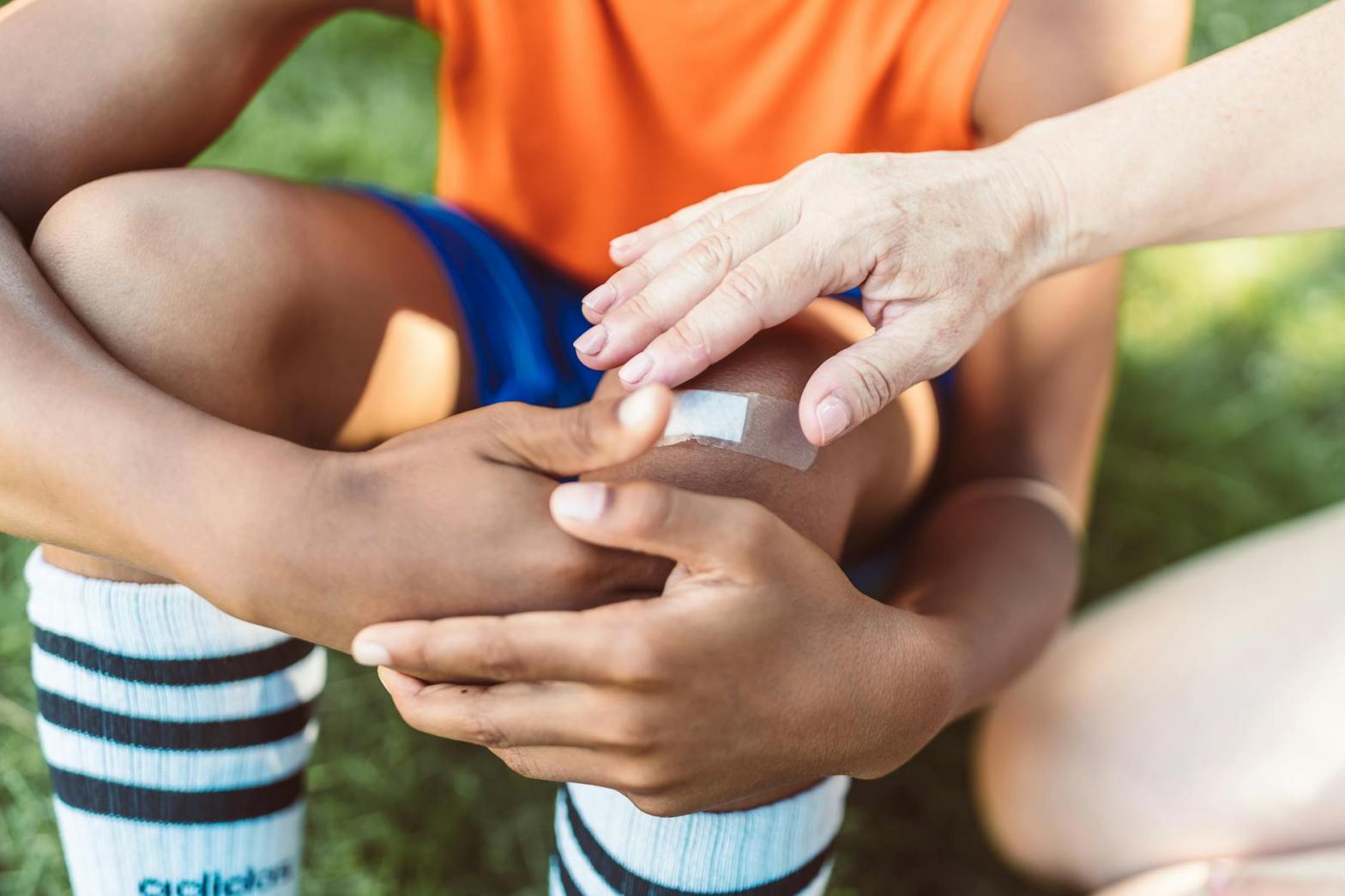
Injuries to the skin, where the damage is only superficial, can come from cuts, abrasions or chafing. While cuts are usually a direct impact to the skin, abrasions and chafing are a form of dermal inflammation.

Where skins injuries occur, abrasions, excoriations and chafing do not damage the skin deeper than the upper layer, the epidermis of the skin. Cuts may be deeper, penetrating into the deeper layers of the skin.

Superficial cuts and excoriations, depending on their severity, can cause redness, pain, itching or burning. In severer cases these wounds can bleed and may cause scarring when healing.

In avoidance of infection, the acute conventional treatment of such superficial skin injuries is to clean the wound, dry it and bandage it after the application of a topical anti-inflammatory product.

In order to clean the wound, a non-alcoholic calendula tincture can be used. Calendula is known to inhibit the bacterial growth in the affected area and has wound healing properties.

Topically- in the form of a cream, Calendula aids the recovery of wounds.

Internal administration of homeopathic remedies can be used to assist the healing process.

Calendula acts as a general wound healing remedy.

Hypericum can be used where the injury is a laceration wound and the nerve is affected.

Ledum is a remedy for punctured wounds.

Where inflammation has progressed, symptoms as heat in the affected area, redness, swelling and pain may occur. In such cases Hepar sulphuricum any Pyrogenicum may be remedies to consider.