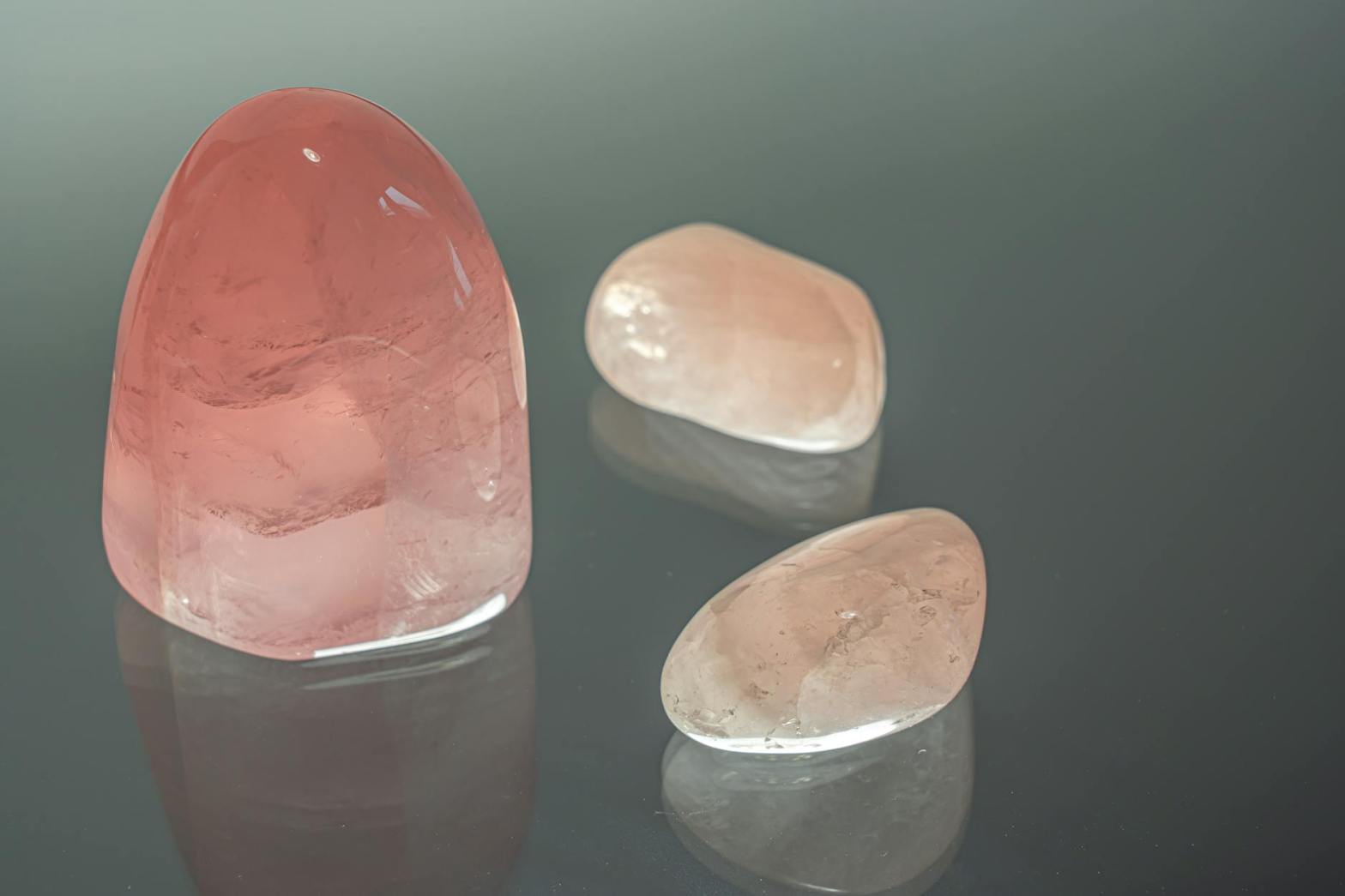
Rose quartz, has always been associated with the theme of love, in one way or another. It has even been referred to as the stone of universal love, and has been likened to a symbol of beauty, gentility and peace, to harmony and balance, the heart and healing.
It is a stone said to balance the heart chakra, to open the heart to giving and receiving unconditional love, and to connect with and extend self-love.
Kindness, compassion and empathy are keywords, and someone ‘in-tune’ with Rose quartz is gentle, emotionally balanced, calm, strongly inclined towards positivity, and exudes a subtle loving and healing energy.
As a homeopathic remedy, Rose quartz is a healer of the emotional heart. All types of heartache from emotional trauma, unrequited love, disappointment, separation or loss, respond very well to Rose Quartz. It is a remedy for grief where, for example, the love to a married person, is not answered. There is a strong feeling of responsibility towards loved ones lying on the shoulders of people needing this remedy. It is also a remedy indicated where there is an unhealthy addiction to a love relationship, and it is helpful in releasing the trauma from sexual abuse.
It’s need can also bee seen where children, who suffer from parental conflict in the home, want to please and appease both their mother and father in, for example, a family where a divorce is looming. These children are stressed and in a constant state of anxiety.
Rose Quartz purifies and harmonizes, and promotes self-love and inner healing.
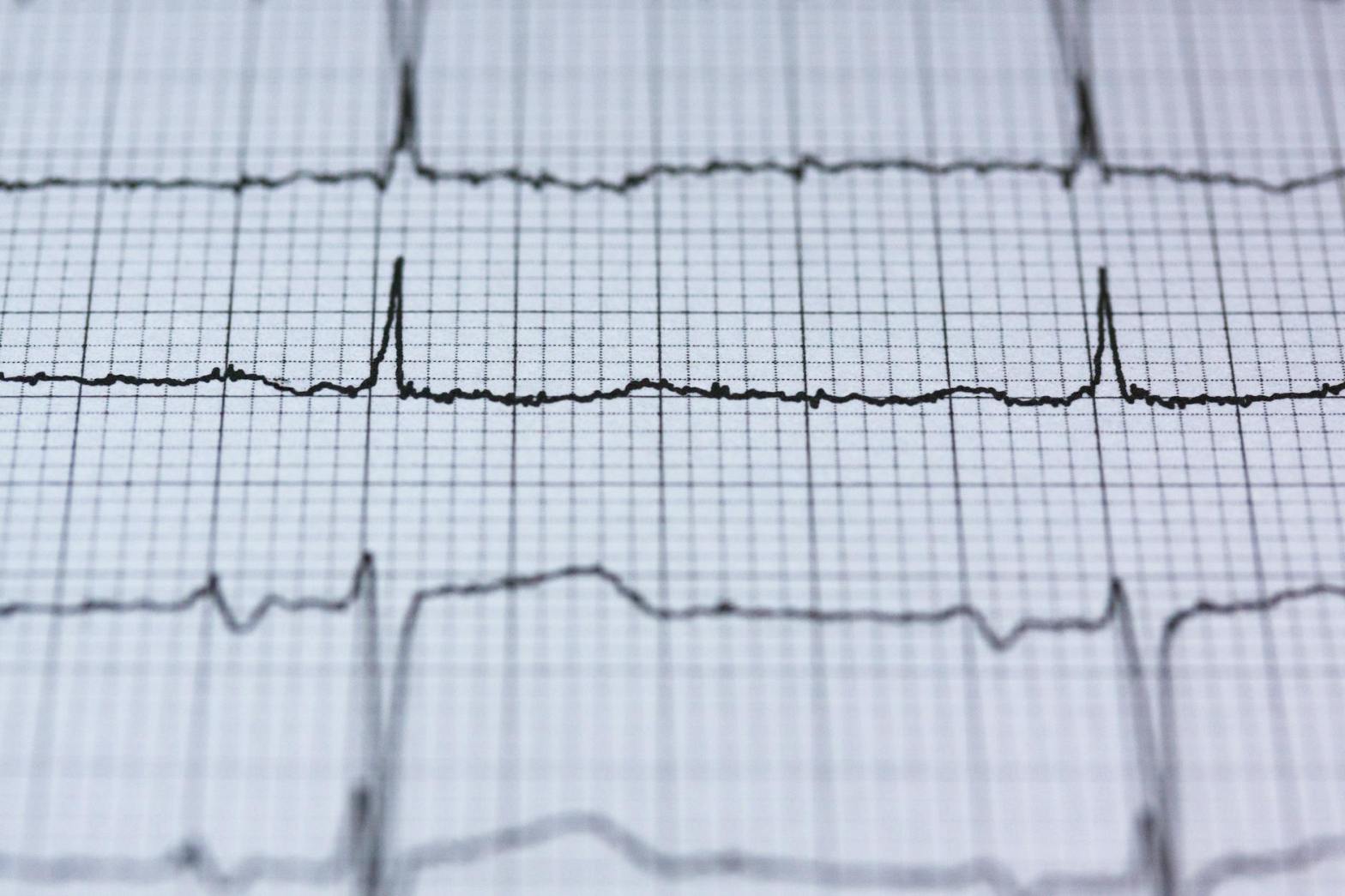
Angina Pectoris is a symptomatology that in 2009 affected an estimate of 30 000 to 40 000 people per 1 million of the European population [1], and approximately 9.8 million people in America, with tendency rising [2].
It is a syndrome that is characterized by precordial discomfort; pressure, squeezing, burning or fullness located centrally about the chest. This is frequently accompanied by pain extending through to the back, or into the shoulder and arm, and may radiate to the throat and jaw, the upper abdomen and at times the right arm [3]. The onset of symptoms is usually due to physical exertion or stress [3], heavy meals or extreme heat [4].
The etiology of Angina Pectoris is commonly an underlying condition called myocardial ischemia [3]. Myocarial ischemia refers to a reduction of the volume of blood passing through the arteries, as a consequence of which the amount of oxygen transported to the heart is also decreased [5]. This is usually due to yet another underlying more severe issue, namely coronary heart disease, where the coronary arteries are obstructed as in the case of atherosclerosis [3]. Other causes of myocardial ischemia are spasms of the coronary arteries, or an embolism caused by the plaque formation of artheriosclerosis that then ruptures and forms a clot that blocks an artery [5].
Attacks of Angina Pectoris commonly subside after a few minutes and are relieved by rest [3]. The most important element in the treatment of Angina Pectoris is the removal of the causative factors, at least the prevention of further progression of the underlying condition [4].
First aid treatment, and the most common prescriptions in Angina Pectoris, are drugs containing nitroglycerine [4]. Nitroglycerin dilates the arteries and as such permits an increased volume of blood to flow through the vessles [4].
Nitroglycerine – an explosive drug!
In 1846 the Italian chemist Asciano Sobrero sought to create a new kind of substance that had blasting power. He synthezised Nitroglycerin by combining nitric and sulphuric acid [6, 7]. In 1867 then Alfred Nobel, the scientist and initiator of the Nobel prize, patented Nitroglycerin as a explosive [6].
The first physician to suggest nitroglycerin as a treatment for Angina Pectoris was British born William Murrell (1853 – 1912) in 1879 [7, 8]. He and few of his colleagues dared to experiment with Nitroglycerin, and trialed this explosive substance in highly diluted form on themselves. Murrell had taken Nitroglycerin 30 to 40 times before using it in the treatment of patients [8].
From experiential reports and his own findings, Murrell identified Nitroglycerin to be an instantly acting substance. The ingestion of a tiny quantity sufficed to induce a sensation of fullness about the neck, slight nausea, mental confusion and drowsiness. A rushing noise in the ears was described, a heaviness in the stomach and frequently a tensive headache that was felt over the eyes and could extend to the nose and ears [8, 9].
Murrell prescribed Nitroglycerin for patients that experienced symptoms of sudden onset of intense pain about the chest that was triggered by slightest physical exertion or emotional excitement. Patients described a sensation of heat and burning in the chest that was succeeded by an acute, painful pressue. This pain could radiate to the back, between the shoulders, and along the inner side of the arm down to the elbow. Murrell points out that this pain only rarely passed below the elbow towards or into the fingers. Shortness of breath, an increased pulsation, and a sensation of coldness in an attack were also described [8].
These attacks commonly lasted no longer than 3 to 4 minutes, and the administration of Nitroglycerin cut an attack short. Murrell exclaimed that “the action of the medicine seems to commence the moment it is swallowed” [8, p.43]. Unfortunately the ingestion of Nitroglycerin almost always produced a throbbing sensation across the forehead, at the height of the hairline, a sensation of pulsation experienced throughout the body, and a noise like running water in the ears [8]. This concomitant symptomatology of Nitroglycerin is one that for most patients still accompanies an ingestion of the drug.
Murrell further noted of Nitroglycerin that the susceptibility to its action was more pronounced in weaker individuals and women. He stressed that a physiological effect could be excited by merely handling it, and pointed out that following an administration of the drug patients would experience “an immediate, irresistible need for sleep” [8, p.29].
The homeopathic origin of nitroglycerin as a healing agent
In 1848, long before the conventional medical sphere took note of the healing potential of nitroglycerin the German Homeopath Constantin Hering (1800 – 1880) had recognized its value as a homeopathically produced remedy for throbbing and congestive headaches.
Hering never considered Glonoinum, homeopathic Nitroglycerine, for Angina Pectoris [6], but it has found its way into the homeopathic Materia Medica as a remedy for many symptoms, including those of the symptomatology of Angina Pectoris. As such it is, amongst others, indicated for the following key symptoms:
– Surging of blood to the head and heart [10, 11].
– Violent palpitation, laborious action of the heart [10, 11].
– Throbbing and pulsating headache in forehead and between temples [11].
– Throbbing in front of the head [11], that becomes worse by exertion [12].
– Pressure and throbbing in the temples [11].
– Pulsation experienced throughout the body. Pulsating pains [10], felt as if the head would burst [12].
– Paleness of the face [12].
– Adverse effects from being in the sun, sunstroke [12].
– Confusion, heaviness about the head [10].
– Can bear no heat about the head [10].
Perhaps it was due to the skepticism of the homeopathic doctrine that the conventional medical sphere took 30 years to investigate the therapeutic potential of Nitroglycerin [7], but only due to these previous investigations did Nitroglycerin at all become a successful medicinal agent. As such Nitroglycerin was considered by some as the “ first breakthrough, on a large scale, of homeopathic remedies into allopathic practice” [6, p.25]. Until today it is a reliable treatment agent for managing Angina Pectoris, both as a highly diluted conventional drug, and as a highly diluted and succussed homeopathic remedy.
[6] Bruce Fye, W. (1986) Nitroglycerin: a homeopathic remedy Circulation, Vol. 73, 1, pp.21-29. Available from : circ.ahajournals.org/content/73/1/21.full.pdf [4th May 2015].
Iberis amara is a homeopathic remedy with major characteristic symptom expressions that make it specific for particular affections of the heart. It affects the muscle of the heart, the coronary arteries, the conduction system of the heart and the peripheral circulation. As such Iberis is indicated for cardiac and coronary insufficiency, arrhythmia (tachycardia), angina pectoris, hypertrophy, myocarditis and endocarditis.
The particular heart symptomatology includes palpitation that is instigated by the slightest of physical exertion. Closing a window, coughing, laughing, or turning over in bed may suffice to produce accelerated, irregular beating of the heart. During this episode the individual may experience the sensation of dull heaviness and dragging pressure in the region of the heart, and marked shooting, darting pains that are experienced as stabbing or stitching. These symptoms promote great anxiety in the patient and may cause associated feelings of fear and nervousness. There may be marked coldness of hands and feet, while the face may be flushed with a sensation of fullness about the head and neck. Cold sweat may develop on the face. The patient desires to sigh or draw long breaths.
The heart beats faster and stronger and the actual pulsation is visible over the cardia-thoracic area. The pulse is erratic or intermittent, tremulous and not well-defined while being full and strong. The hearts action may at first be weak and is then succeeded by an increased full and strong, irregular pulse rate of +/- 100.
Concomitant to the cardiac symptoms there may be anxiety, increased salivation, dyspnea, and shortness of breath, the feeling of constriction and oppression, as well as vertigo. The patient may experience persistent eructation and bloating with an increased frequency of passing soft stool from the ingestion of food and there may be associated digestive weakness. A choking sensation may be felt in the dry throat and there may be the feeling of pressure and pain in the region of the liver. Soreness, lameness and trembling may be felt in the extremities, particular in the upper left arm and hand.
The patient feels worse for turning or lying on the left side, at night or upon rising in the morning. Altering the resting position or placing a hand on the chest above the heart does not ameliorate symptoms.
Following such an ‘attack’ there may be an increased urge to urinate only scanty quantities, and the patient may feel a general soreness and lameness throughout the body.
An interesting aspect of the therapeutic picture of Iberis amara is its association with gastro-intestinal issues. While this is not an integral part of the homeopathic remedy picture, it is so of the Materia Medica as a phyto-therapeutic agent. Iberis has been found to have antispasmodic, anti-inflammatory, anti-flatulent and calming properties, which it exerts on the mucous membranes of the digestive tract. As such it has found inclusion in herbal complex preparations aimed at treating an irritable stomach, functional dyspepsia or the colon irritable, the syndrome known as IBS, and ailments of the digestive tract associated with abdominal discomforts such as cramping and pain, motility disruption, diarrhea or obstipation. One such complex preparation is ‘Iberogast’, which in some countries is known by the name ‘STW 5’, and contains a combination of 9 different herbs. Research however has come to conclude that it is in particular the combination of the 9 herbs together that promote the efficacy of the complex. Iberis amara alone has not been found effective for the above mentioned gastro-intestinal issues.
References:
Allen, T. (1877) The Encyclopedia of pure Materia Medica . Internet Archive [Online]. Available at: https://archive.org (Accessed: April 2017).
Boericke, W. (2004) Pocket manual of homeopathic materia medica and repertory New Delhi: B.Jain publishers Ltd.
Clarke, J. (1994) A Dictionary of practical materia medica New Delhi: B.Jain publishers Ltd.
DHU (1994) Homöopathisches Repetitorium Karlsruhe: Deutsche Homöopathie Union.
Hale, E. (1897) Materia Medica and special therapeutics of the new remedies. Internet Archive [Online]. Available at: https://archive.org (Accessed: April 2017).
Hering, C. (1879) The guiding symptoms of our Materia Medica. Internet Archive [Online]. Available at: https://archive.org (Accessed: April 2017).
Madisch, A., Holtmann, G., Plein, K. & Hotz, J. (2004) ‘Treatment of irritable bowel syndrome with herbal preparations: results of a double-blind, randomized, placebo-controlled, multi-centre trial’, Aliment. Pharmacol. Ther., 19(), pp. 271-279 [Online]. Available at: doi:10.1111/j.1365-2036.2004.01859.x (Accessed: April 2017).
No name (1997) ‘Expertengespräch anläßlich der 51. Tagung der Deutschen Gesellschaft für Verdauungs- und Stoffwechselerkrankungen mit Sektion für Gastroenterologische Endoskopie’, Aerztezeitschrift für Naturheilverfahren, 38(2), pp. 146-149.
Rahimi, R. & Abdollahi, M. (2012) ‘Herbal medicines for the management of irritable bowel syndrome: A comprehensive review’, World Journal of Gastroenterology, 18(7), pp. 589-600.
In order to maintain a healthy heart and blood circulation it is not wrong to occasionally take supportive measures. Sufficient movement in fresh air, moderate exercise, such as walking or swimming, or hot / cold alternating baths, are true restorers and preservers of a healthy heart and blood circulation. Proper hydration and healthy eating do the rest for good circulation.
But there are also other methods to support the system.
Red wine is good for you!
pic via pixabay.com
Scientific studies have repeatedly demonstrated that red wine is good for your heart! However, only in moderation! With a moderate consumption of red wine, which means no more than 150ml per day, such consumption can reduce the risk of heart disease by about 30%. The reason for this, researchers have found in the composition of the wine. The ingestion of flavonoids and resveratrol, the main constituents of the wine, results in dilation of the blood vessels and thus increase blood flow. Blood clotting is reduced and the formation of clots thereby limited. This in turn reduces the risk of heart attack and stroke. Incidentally, more recent studies have provided evidence that white wine too has these properties.
The Hildegard heart tonic
By Miniatur aus dem Rupertsberger Codex des Liber Scivias., Public Domain, httpscommons.wikimedia.orgwindex.phpcurid=1718595.jpg
Hildegard von Bingen (1098 – 17.09.1179) already ascribed a healing effect to red wine. The abbess recommended the ingestion of ‘Heart-wine’ to strengthen the heart and the revitalization the circulatory system. This recipe however, not solely consists of red wine, but is a concoction of wine, parsley and honey. The relaxing and calming effect of the Heart-wine potion on the cardiovascular system may, apart from the wine, come from the vitamin- and mineral- rich composition of the parsley, and the antioxidant properties of the honey. Together these ingredients cause the coronary arteries to expand, lower the blood pressure and strengthen the heart.
Hildegard heart-wine:
* 10 parsley stems
* 2 tablespoons wine vinegar
* 1 litre of red wine
* 200 – 250ml Honey
In preparing the wine, the parsley stems, vinegar and wine are placed in a pot to boil. The concoction should simmer for 5 to 8 minutes. Then the concoction should be strained and left to cool. The honey should only be added once the mixture has cooled to merely lukewarm. Adding the honey to the hot brew is likely to ruin the effective ingredients contained in the honey.
It is recommended to consume a liqueur-glass of this ‘Heart-wine’, up to three times a day, to relieve said heart problems, and strengthen the heart
Hawthorn – Crataegus
Crataegus is the Latin name for Hawthorn.
It grows as a low tree, rather a bush, whose white flowers bloom in spring. Its fruits ripen towards late summer and autumn, and are of a fiery red color. Hawthorn belongs to the genus of the rose family, and there are between 100 and 200 different species. It grows along roadsides and in hedges.
Its potential as a medicinal plant is focal on, in particular, the weak, and elderly heart. Accordingly, preparations of hawthorn are recommended for patients with decreasing cardiac output or cardiac insufficiency, the senile heart, arrhythmia, and the sensation of a narrowing or pressure in the region of the heart. Crataegus also has a stabilizing effect on blood pressure, and helps to regulate low and high blood pressure.
There is evidence that hawthorn promotes the contraction of the heart muscle and improves the hearts’ pumping force. The circulation of the coronary arteries is increased. The heart is thus strengthened and its efficiency increased.
A treatment with Crataegus can be drawn into consideration if the following symptoms are noted:
– Low exercise capacity
– General lassitude
– General rapid fatigue
– Palpitation, fatigue and / or shortness of breath after only slight exertion
There are no known adverse effects of taking Crataegus.
Circulatory complaints in the legs
When legs suddenly feel heavy or painful, when ankles are swollen, the leg cramps, and the skin shows discoloration or varicose veins, a circulatory issue is often the cause. In such cases the blood circulation in the lower extremities may be limited, and often some simple measure suffice to bring about relief. For example, movement, massage, stretching exercises, or elevating the legs may reduce the symptoms.
Other measures included the use of various creams and preparations, containing for example, Aesculus (horse chestnut) or Hamamelis (witch hazel). These may be taken into consideration in the prevention and treatment of such circulatory disorders.
In homeopathic form, Aesculus and Hamamelis may be used in low potency, for example 6X.
Aesculus is indicated if:
– The legs are heavy and tired.
– The skin on the legs feels tense, and swollen.
– The veins appear jammed or inflamed.
– This ‘Aesculus’ circulatory disorder is not necessarily painful.
– The patient has is a tendency to thrombosis.
Hamamelis is indicated if:
– There is a sensitivity to touch, pressure and heat.
– Varicose veins are painful.
– There is a prevailing feeling of exhaustion in the legs.
– The veins shine through the skin, in a dark bluish color.








 Gentle Help
