One of the injuries most frequently acquired during sports is a contusion, so to speak bruising to the muscular tissue. While most such bruising is of little concern and will quickly resolve on by itself, more severe contusion that involves deeper lying tissue, may be a complication to athletes, causing them to have to refrain from any physical activity for quite a long time.
Damage to tissue beneath the skins surface may involve the crushing of muscles and connective tissue, and the rupturing of small, peripheral vessels, leading to the leakage of cellular fluids and blood into the surrounding tissue. The blue or blackish discoloration of the affected is a sign of such fluid leakage. The skin is usually not broken.
Contusions occur when an injury is produced by a direct, blunt, forceful impact to the body’s soft tissue, such as a blow, falling or jamming. At the located area there may be swelling and pain. There may be weakness and stiffness of the affected part. In some cases there may be the formation of a hematoma (blood collected at the point of impact that may be felt as a lump on the site of injury).
Complications to this type of injury are deep contusions impacting internal organs or bones.
Major 1st aid homeopathic remedies for contusion are:
Arnica: For all types of contusion. Great pain relief remedy
Bellis perennis: Follows well after Arnica. Rapid onset of healing.
Hamamelis: Indicated where Arnica fails to do something.
However there are other remedies for such injuries: Aconite, Calendula, Conium, Echinacea, Hypericum, Ledum, Rhus tox., Ruta, Symphytum to mention a few.
References:
American Academy of Orthopaedic Surgeons (2016)Muscle Contusion (Bruise), Available at: http://orthoinfo.aaos.org/ (Accessed: June 2016).
Boericke, W. (2004) Pocket manual of homeopathic materia medica and repertory New Delhi: B.Jain publishers Ltd.
Clarke, J. (1994) A Dictionary of practical materia medica New Delhi: B.Jain publishers Ltd.
Morgan, Lyle (1988) Homeopathic treatment of Sports Injuries, Rochester: Healing Arts Press.
Walker, Brad (2007) The Anatomy of Sports Injuries, Chichester: Lotus publishing.
Concussion can occur in the process of many physical activities, whether they are conducted for leisure or for a wage, whether an amateur or a pro. A concussion is a traumatic injury to the brain caused by a sudden acceleration, rotation or shaking of the head. This causes a forward and backward motion of the brain inside the skull.
Processes and functions of the brain are temporarily compromised and the patient may feel confused, show impaired coordination, balance or speech, and may experience memory loss for some time. A patient may also lose consciousness due to a concussion. Other, early indicative symptoms are headache, nausea, dizziness and drowsiness.
It is important to note that symptoms may not appear directly after the injury is contracted, they may be delayed for several days before they are noticed. Recovery from a concussion requires several days, yet repeated concussion may have lasting impact. Physical and mental rest, until symptoms have subsided, is key to recovering from this injury. Only a gradual return to activity is recommended, darting too fast into physical exertion may bring symptoms back.
Homeopathic remedies may support the recovery from concussion. The following remedies may be helpful in relieving the symptomatology:
The Tennis Elbow refers to an overuse injury, a repetitive straining of the muscles that attach to the bones of the arm at height of the elbow. Biologically this injury is termed lateral epicondylitis. The so called Golfer´s Elbow, is similar to the Tennis Elbow, however affects the inner area of the elbow joint, while the Tennis Elbow involves the outer area of the elbow. The Golfer´s Elbow is denoted as medial epicondylitis. It is the different swing movements that depict the focal point of trauma locality, and differentiate the Tennis- from the Golfer´s- elbow injury.
While overexertion is a frequent cause of this type of trauma, a direct impact to the area of the elbow may likewise promote this injury. Epicondylitis describes the irritation and inflammation that develops at the sides of the elbows epicondyles in the event of such physical trauma. Pain, swelling and tenderness may be symptoms experienced at the locality, and mobility of the affected arm is strongly restricted, as very painful.
None of these injuries have to be caused by playing tennis or golf. However athletes conducting physical activity using their arms in specific swing movements are more predisposed to such an injury. House or garden work can likewise be the cause of such trauma and can result in these injuries.
Conventional 1st aid measures to promote relief are the R.I.C.E.R recommendations. Rest, Ice, Compress, Elevate the affected arm, and if there is no relief Refer to a doctor.
Some homeopathic remedies that may assist recovery from this type of injury are: Arnica, Belladonna, Bryonia, Rhus tox., Ruta
References:
Clarke, J. (1994) A Dictionary of practical materia medica New Delhi: B.Jain publishers Ltd.
Morgan, Lyle (1988) Homeopathic treatment of Sports Injuries, Rochester: Healing Arts Press.
Walker, Brad (2007) The Anatomy of Sports Injuries, Chichester: Lotus publishing.
The symptom complex of PTSD, post-traumatic-stress disorder, exhibits a specific and individualized symptomatology. Homeopathy has a number of remedies at its disposal, with which this particular symptom complex and its individual expression can be treated. Some of the remedies that may be useful in treating PTSD are listed below.
Absinthium: The patient needing this remedy may experience nervousness and sleeplessness, has visions and hallucinations that are frightening and terrifying. The patient may have the urge to walk, distressed by the visions of all sorts of demons. He or she does not care whether he or she lives or dies. He or she does not want to engage with others. There may be a tendency to brutality and violence. This may alternate with stupor.
Aconitum: There is great and uncontrollable anguish, fear and anxiety; irritability, sadness and gloom. Much worry, uneasiness and fear accompanies even ordinary sickness. He or she fears there will be no recovery from illness. He or she may predict the day of his death. There is nervousness and weakness. The individual may have fear to leave the house, of being in a crowd. Complaints may come from situations of fright or fear. In states of deliria the patient needing Aconitum is unhappy, worries, raves and despairs over the fearful anticipation of his or her death. There is sadness, maliciousness, a high disposition to anger, fear and conflict. There is a sensitivity to noise, a dislike of communication, a vexation over trifles. Great irritation, nervousness, restlessness and excitement are characteristic. A fear of spectres, the dark, forebodings and a tendency to start are also prevalent, as is the disposition to run away from the locality. Aconite is a short-acting remedy for the acute states.
Agaricus: This remedy is characterized by great changeability, irritability, and depression. There is a state of delirium with confusion of the mind. The individual wishes not to engage in communication with others.An indisposition to mental or other labour. There may be timid or violent mania with persistent delirium in which he or she recognizes no one and throws objects around. The individual is morose and stubborn.
Anacardium: This remedy has fixed ideas and hallucinations. He or she is easily offended; contradiction makes him or her furious. The individual expresses anxiety over somebody following him or her when moving about. There is deep melancholy and hypochondriasis. There is depression, sadness and despair over health. The patient is suspicious and distrusting. He or she can be malicious with an absence of moral restraint. Absent mindedness, dullness and sluggishness of mind may be prevalent. He or she may be hearing voices and may have hallucinations. There is anxiety, despair over the future, even fear of nearing death.
Anhalonium: In this remedy there is distrust and resentment. The individual is confused, and delusional. There may be a depersonalisation taking place within the patient. He or she may be dissociated from his or her nearest environment. Likewise there may be over-identification with that environment. The feeling for time and reality is lost.
Ambra grisea: Ambra dreads the company of people and wants to be alone. He or she is shy in the presence of others. The individual can despair over life to the extent that he or she loathes life. He or she is restless, excitable and loquacious. Concentration is difficult for this individual. There may be confusion of thoughts. He or she is ‘forced’ to dwell on disagreeable things. These things can be fantastic hallucinations images, grimaces, fancies, visions, or imaginations. They are annoying to him or her and keep the patient from sleeping. The company of others is experienced as disturbing. There is the feeling of embarrassment, with nervous excitement, flushing, and trembling. The individual imagines that he or she is losing his or her mind which causes melancholy, great sadness and despair to the extent that the patient desires to die. He or she considers life unworthy of living. Ambra is the distinctive picture of an individual who used to be a vital, vigorous and strong person, and since the causative experiences is a broken, nervous, quivering, trembling wreckage.
Arsenicum album: A remedy that is indicated for great anguish accompanied by restlessness. There is fear is of death, of being left alone. The fear is also accompanied by cold sweat. The individual takes no medicines as he or she thinks these are useless. He or she may have olfactory and auditory hallucinations, may be delusional with a tendency to mania and delirium. He or she is sensitive to confusion and disorder. These make him or her anxious, prostrated, fearful and restless. The restlessness keeps the person in movement. He or she does not stay still. As the individual may be of selfish character, lacking courage, being miserly may incline him or her to be malicious or suicidal. This individual may be extremely sad, melancholic, and such a state may make him or her weary of life, loathing it, wanting to die, and this character may actually commit suicide.
Aurum metallicum: The patient needing Aurum exhibits feelings of self-condemnation, utter worthlessness, deep despondency, and a deep disgust for life. These make him develop a tendency to want to commit suicide. He or she truly loathes life, is weary of it even desires to die. This is a deep depression, a profound melancholy that robs the individual of all that is joyous in his or her environment. He or she fears death. He is grumpy, broody, and extremely sensitive to noise and commotion around him or her. He or she cannot handle contradiction, is quarrelsome. He is a very dutiful character and sees criticism as consequence of a sin, a neglect he or she has committed. Therefore he or she thinks him or herself as unworthy of salvation. He or she is a pessimist, expects things to go wrong, and sees only the negative, never the positive. The future is negative; there is only trouble, turmoil ahead. This makes him or her irritable, worried, and easily angered.
Gelsemium: This is a remedy for the ill effects coming from the exposure to fear, fright, disruptive news or other emotional excitement. There is languor, dullness, apathy, lethargy, deliria. He or she wants to be alone, quiet; is irritable, sensitive, depressed. The individual cannot concentrate; the mind feels empty, dull. There is a strong tendency to suicide. This individual has the urge to throw him or herself out of a window or from a height.
Kalium bromatum: In this remedy there is a deep delusion of being morally deficient and of conspiracies building against him or her, feels singled out. Fears of getting poisoned, has frightful nightmares, horrible illusions, is depressed and melancholic.
Natrium muriaticum: In this remedy ailments are produced by mental disposition; anger, grief, fear and fright. The individual is irritable, tearful, sad, and even hysterical. He or she can get into a rage about trifles, and can be tragically moved about little unimportant things; can be inappropriately joyful. There is anxiety and anguish concerning the future. The individual prefers solitude to company, is unable to conduct regular intellectual work, is indifferent to his or her surroundings. Depression and melancholy induce recollection of unpleasant incidences. There are gloomy forebodings to him or her. Patients become tearful, yet attempts of consolation worsen the state. They fly into a rage easily and hold a grudge against people that have previously wronged them. There is weakness of memory, forgetfulness, and patients are tired of life.
Opium: Opium has frightful visions with fear, anxiety and uneasiness. The individual starts easily and is easily excitable. There is inquietude, irritability, and anxiety. There may be alternating phases with pleasant reveries. The individual may express symptoms of stupidity and imbecility. In delirium these individuals do not recognize their surroundings, cannot judge what goes on around them. Morphium (derivative of Opium): This remedy is one for states of shock that have been caused by experiences of terror. He or she is as in a dream-like state. Yet they may be irritable. There is a deep depression and the individual may be hysterical.
Nitricum acidum: This is a headstrong person, who can be hateful and vindictive. He or she may be indifferent to all. There is a sense of hopelessness and despair over his or her health. He or she fears death, yet is tired of life, and takes no joy in anything. He or she is obstinate, wishes not to be consoled; is depressed, sad. Great melancholy and fits of anguish are prominent. Can become enraged about trifles, curses, is obstinate and resentful. He or she is easily startled and frightened, sensitive to noise, touch and pain; weeps easily. This individual becomes angry over his or her own mistakes. He or she does not want to engage in communication with his or her surroundings. This person may have a great weakness of memory and intellectual capability and may be unfit to conduct work.
Stramonium: This individual can be deluded about who he is. He or she cannot be alone or in the dark. He or she needs company in an illuminated environment. There is rage, frenzy, fury, uproar, violence, and tumultuousness. He or she curses, is lewd and abusive in his or her language. There is fear and anxiety. Joy and sadness can alternate quickly. There are hallucination and delusion that the patient considers true and cannot release him or herself from. The sadness and melancholy of this remedy can be tearful and with great anguish. He or she is inconsolable, and trifles irritate much. The individual is obstinate, choleric, self-willed. He or she, in phases of fury, may be inclined to hit, bite and even kill. This is a mania caused by shock. The individual may be indifferent to matters at one time; feeling incapacitated at another, and may have the desire to run from it all.
*** This record serves as an illustration of what remedies are in use in the treatment of PTSD. The list is NOT exhaustive. None of the remedies should be used for self-prescribing. Please see a homeopath to identify the best matching prescription for you! Homeopaths have been trained to identify subtle differences in symptoms and remedy pictures and these subtle differences are important to identify the best possible remedy for a patient.***
References:
Abc Homeopathy (2017) Homeopathic Remedies, Available at: https://abchomeopathy.com (Accessed: 24th September 2017).
Boericke, W. (1999) Homeopathic Materia Medica. Homeoint [Online]. Available at: http://www.homeoint.org (Accessed: 24th September 2017).
Clarke, J.H. (2000) A dictionary of practical Materia Medica. Homeoint [Online]. Available at: http://www.homeoint.org (Accessed: 24th September 2017).
Cowperthwaite, A.C. (2003) A textbook of Materia Medica. Homeoint [Online]. Available at: http://www.homeoint.org (Accessed: 24th September 2017).
Guernsey, H.N. (2000) Keynotes to the Materia Medica. Homeoint [Online]. Available at: http://www.homeoint.org (Accessed: 24th September 2017).
Hpathy (2017) Materia Medica, Available at: https://hpathy.com (Accessed: 24th September 2017).
Kent, J.T. (2000) Lectures on homeopathic Materia Medica. Homeoint [Online]. Available at: http://www.homeoint.org (Accessed: 24th September 2017).
National Center for Homeopathy (2017) Materia Medica & Repertory Database, Available at: http://www.homeopathycenter.org (Accessed: 24th September 2017).
What to do if things fail to go to plan, and troubling incidents, disturbing experiences or startling events cause disquietude, shock or feelings of anxiety?
Even worry can lie heavily on the mind, and may cause emotional upheaval and distress. In such cases it is good to know that there are homeopathic remedies at hand that may be helpful in calming the mind and easing the symptoms.
Below are a number of homeopathic remedies that can help restore balance where feelings and emotions related to anxiety or shock have disrupted the inner calm.
Aconitum napellus: In the event of sudden and very severe onset of a state, Aconitum is the first remedy to give. This can be the case where an incident shocks, or produces great anxiety, as for example following an accident, an injury, or an uncomfortable experience. Any event that happens without a warning calls for Aconitum. The individual is tense, anxious, greatly nervous, restless, excited and irritated. There is a disposition of the individual to want to walk away from the situation or place of anxiety.
Arnica montana: Arnica is indicated for the effects from mental strain and shock. As such also for shock that come from injuries, in particular those to the head. It is also a remedy that can be useful when someone is fearful of and easily frightened by nightmares, and when shocking incidents lead to nightmares. The individual may act gloomy, wants to be left alone, not to be talked to, not to be touched.
Gelsemium sempervirens: Shock, fright, fear or other emotional excitement, as from the receipt of bad news for example, can lead to ill effects, even physical ailments. There is great weakness, on the physical and mental level. Ahead of any challenges, upcoming exams or anticipated excitement, as for example in stage fright, the individual may exhibit symptoms such as weakness, an increased need to pass urine, diarrhoea and trembling. In this state it is difficult to think or concentrate. Quiet and to be left alone helps an individual most in such a case.
A common OTC remedy helpful in bringing about calm and ease to the mind is :
*Rescue-remedy: Rescue-remedy is not a homeopathic remedy. Rescue is the most widely known remedy of the Bach flower essences. A complex preparation of 5 different flower remedies: Impatiens, Star of Bethlehem, Cherry Plum, Rock Rose, and Clematis. This combination is an emergency formula intended to provide relief, and enable immediate treatment in cases of crisis, trauma and stress. It is indicated in states of impatience, frustration, agitation, shock, fear, and panic. As such it can be used to relief of anticipated fear, nervousness, tension, tantrums, confusion, or trauma. It relaxes, calms, lowers stress, and revitalizes. It is a distinct Bach-flower essence combination that can be purchased at health food stores. For directions of use, please consult the package insert!
Traumeel is a homeopathic complex preparation indicated for use in the treatment of trauma and injuries contracted in the process of physical activity [1]. It matches, in a broader sense, the symptomatology that may result from the conduction sports.
Traumeel is one of the most extensively researched homeopathic formula [2]. Trials and studies investigating the efficacy of Traumeel came to conclude that it can in fact be described as the ‘Diclofenac’ of homeopathy [3]. It´s treatment effect, tolerability and compliance, have been found to be equivalent, if not superior to that with conventional non-steroidal anti-inflammatory drugs, as is for example ‘Diclofenac’ [4, 5, 6].
Traumeel is a protected brand, manufactured by Heel. It is a composition of 14 natural extracts that have been homeopathically potentised to decimal dilutions, or are included in the concoction as mother-tincture [7]. These components in combination are stronger than the single constituents when used separately [8]. Traumeel is marketed as a topical ointment or gel, injections, and for oral administration as drops or tablets. [8].
As a complex preparation Traumeel cannot be classed as a classic homeopathic medication. Complex formulations are designed to be prescribed in a generalized manner and do not follow the doctrine of individualization that is paramount in classical homeopathic prescribing. The aim of such poly-remedy prescribing is for the treatment compound to match the broad spectrum of symptomatology expressed for a specific condition [9].
Traumeel is used for the alleviation of limitations caused by pain and inflammation in muscular tissue and joints, and is as such indicated for musculoskeletal conditions that affect all major joints, the back, neck, foot, knee, arms etc.. The treatment with Traumeel is effective, gentle, and devoid of adverse effects [8].
References:
[1] Orchard, J., Best, T., Mueller-Wohlfahrt, H-W., Hunter, G., Hamilton, B., Webborn, N., Jaques, R., Kenneally, D., Budgett, R., Phillips, N., Becker, C. & Glasgow, P. (2008) ‘The early management of muscle strains in the elite athlete: best practice in a world with a limited evidence basis ‘, British Journal of Sports Medicine, 42(3), pp. 158-159 [Online]. Available at: doi:10.1136/bjsm.2008.046722 (Accessed: November 2009).
[3] DZS (2009) Individuell trainieren – Prof.Dr. P. Billigmann im Interview zum Thema Fussball, Available at: http://www.zeitschrift-sportmedizin.de (Accessed: March 2010).
[4]. Birnesser H, Oberbaum M, Klein P, Weiser M. (2004) The homeopathic preparation Traumeel S compared with NSAIDs for symptomatic treatment of epicondylitis. Journal of Musculoskeletal Research, 8(02n03),119-128 [Online]. Available at: doi: 10.1142/S0218957704001284 (Accessed November 2009).
[5]. Schneider C, Klein P, Stolt P, Oberbaum M. (2005) ‘A homeopathic ointment preparation compared with 1% Diclofenac gel for acute symptomatic treatment of tendinopathy’. Explore, 1(6), pp.446-452 [Online]. Available at: doi: 10.1016/j.explore.2005.08.010 (Accessed: November 2009).
[6] Gonzalez de Vega,C., Speed,C., Wolfarth, B., Gonzalez, J. (2013) ‘Traumeel vs. diclofenac for reducing pain and improving ankle mobility after acute ankle sprain: A multicentre, randomised, blinded, controlled and non-inferiority trial’, The International Journal of Clinical Practice, 67(10), pp. 979-989 [Online]. Available at: doi: 10.1111/ijcp.12219 (Accessed: January 2016).
One major remedy for the effects of sports-injuries or such afflictions caused by physical activity, external, or mechanical impact is Arnica. Trauma, bruises, or strains caused by heavy lifting, falling, or shock; concussion, contusion, sprains, or dislocation belong to this group. Hematoma, haemorrhage and wound healing, over-exertion and delayed-onset-muscle-soreness are also indicated symptoms, and Arnica has marked characteristics that match such affections.
One principal aspect pertaining to Arnica is the sensation of pain that feels as if beaten and bruised. The aggravation of Arnica symptoms occurs due to talking, blowing the nose, touch, jolting, movement and slightest noise. The Patient generally feels worse in the evening or at night. Humid cold disagrees with this patient. There may be fainting following a mechanical impact or injuries and there is a generalized decline of strength and fatigue, a battered feeling throughout the body. The entire body may feel painfully oversensitive. There is a general restlessness. The patient may be fearful and irritable.
There may be the sensation of heat and burning in the head with coldness of the body. The Arnica face may have pronounced redness, burning, heat, shining swelling and hardness of just one cheek. While the head and face are heated or hot, the body is cold. Arnica easily suffers of nose-bleed.
Where there is inflammation Arnica is indicated for over-sensitiveness experienced in the entire body, a feeling of being battered, pain, general restlessness, irritability and fear.
The sore excoriation of skin, swelling that is hot, hard and red, as well as frostbites react to Arnica. Joints feel as though they are sprained. Strains and Sprains show redness, pain and restricted mobility, and there may be swelling and heat of the affected part (also Rhus toxicodendron). Hematoma of the skin may be of discoloration red, bluish, yellow, green or black. For wound healing Calendula may be indicated besides Arnica. Topical applications of Arnica are indicated for localized injuries, scalds and burns, incisions, lacerations fractures and bruises and muscle soreness.
In concussion of the brain, the pain in the head is concentrated over one eye, and there may be vomiting that is greenish in color. If in such cases Arnica fails, Cicuta virosa may benefit the patient.
Back pain or straining of the back, or of the chest and loins may feel bruised or as of a dislocation. In injuries to the chest Arnica in alternation with Aconitum may be serviceable. There may be a sensation of rawness, and weakness of the muscles in the neck that cannot support the head sufficiently causing it to fall backwards.
The extremities may have symptoms of pain that feel as of a dislocation or as from great fatigue. Stiffness of the limbs, weariness and muscular jerking may be present after physical exertion. There is great soreness that may be paired with the acute sensation of tension and stretching in the lower limbs. The affected area, legs and feet, or joints may have a crawling or tingling sensation, or a prickling feeling from without inward. In the upper limbs, the joints, wrists, hands and arms may feel sore, as if sprained or dislocated, with a tingling sensation, pins and needles.
In the knee there may be tension pain, as of a contraction of the tendons, and failing strength in the knee-joint when walking, almost paralytic (also in the hip). The knee may be pale and swollen. Movement aggravates the pain. If the big toe is affected, it may be painful, hot, hard and swollen, leaving the skin shining.
In contusions there is a battered feeling, which may be paired with restlessness in contortion and sprain. Besides Arnica, Helianthus anuus may be of use in contusion. In dislocation and luxation there may be violent pains, swelling, and impaired mobility where the extremity is deformed or has an altered direction, here Aconitum may follow Arnica for relief pain. In tennis elbow Arnica is indicated, as well as Ruta. In fractures, Arnica may be followed by Symphytum and Ruta to promote healing of the broken bone.
References:
Beuchelt H. Praxis der wissenschaftlichen Homöopathie. Leipzig: Georg Thieme, 1949.
Boericke W. Homeopathic materia medica and repertory. Delhi: B. Jain Publishers Pvt. Ltd., 2004
Clarke J. A dictionary of practical materia medica. New Delhi: B. Jain Publishers Pvt. Ltd., 1994.
DHU (2011) Homöopathisches RepetitoriumKarlsruhe: Deutsche Homöopathie Union.
Laurie J. Elements of homeopathic practice of physic. [Internet] 2005 [cited 2013 December 22]. Available from http://quod.lib.umich.edu/h/homeop/
Millard H. A guide for emergency, containing the homoeopathic treatment… [Internet] 2005 [cited 2013 December 22]. Available from http://quod.lib.umich.edu/h/homeop/
Morgan L. Homeopathic treatment of Sports injuries. Vermont: Healing Arts Press, 1988.
n.a. (1880) The principal uses of the sixteen most important and fourteen supplementary homoeopathic medicines . archive.org [Online]. Available at:https://archive.org/details/principalusesofs00lond (Accessed: April 2016).
Injuries to the skin, where the damage is only superficial, can come from cuts, abrasions or chafing. While cuts are usually a direct impact to the skin, abrasions and chafing are a form of dermal inflammation.
Where skins injuries occur, abrasions, excoriations and chafing do not damage the skin deeper than the upper layer, the epidermis of the skin. Cuts may be deeper, penetrating into the deeper layers of the skin.
Superficial cuts and excoriations, depending on their severity, can cause redness, pain, itching or burning. In severer cases these wounds can bleed and may cause scarring when healing.
In avoidance of infection, the acute conventional treatment of such superficial skin injuries is to clean the wound, dry it and bandage it after the application of a topical anti-inflammatory product.
In order to clean the wound, a non-alcoholic calendula tincture can be used. Calendula is known to inhibit the bacterial growth in the affected area and has wound healing properties.
Topically- in the form of a cream, Calendula aids the recovery of wounds.
Internal administration of homeopathic remedies can be used to assist the healing process.
Calendula acts as a general wound healing remedy.
Hypericum can be used where the injury is a laceration wound and the nerve is affected.
Ledum is a remedy for punctured wounds.
Where inflammation has progressed, symptoms as heat in the affected area, redness, swelling and pain may occur. In such cases Hepar sulphuricum any Pyrogenicum may be remedies to consider.
In order to maintain a healthy heart and blood circulation it is not wrong to occasionally take supportive measures. Sufficient movement in fresh air, moderate exercise, such as walking or swimming, or hot / cold alternating baths, are true restorers and preservers of a healthy heart and blood circulation. Proper hydration and healthy eating do the rest for good circulation.
But there are also other methods to support the system.
Red wine is good for you!
pic via pixabay.com
Scientific studies have repeatedly demonstrated that red wine is good for your heart! However, only in moderation! With a moderate consumption of red wine, which means no more than 150ml per day, such consumption can reduce the risk of heart disease by about 30%. The reason for this, researchers have found in the composition of the wine. The ingestion of flavonoids and resveratrol, the main constituents of the wine, results in dilation of the blood vessels and thus increase blood flow. Blood clotting is reduced and the formation of clots thereby limited. This in turn reduces the risk of heart attack and stroke. Incidentally, more recent studies have provided evidence that white wine too has these properties.
The Hildegard heart tonic
By Miniatur aus dem Rupertsberger Codex des Liber Scivias., Public Domain, httpscommons.wikimedia.orgwindex.phpcurid=1718595.jpg
Hildegard von Bingen (1098 – 17.09.1179) already ascribed a healing effect to red wine. The abbess recommended the ingestion of ‘Heart-wine’ to strengthen the heart and the revitalization the circulatory system. This recipe however, not solely consists of red wine, but is a concoction of wine, parsley and honey. The relaxing and calming effect of the Heart-wine potion on the cardiovascular system may, apart from the wine, come from the vitamin- and mineral- rich composition of the parsley, and the antioxidant properties of the honey. Together these ingredients cause the coronary arteries to expand, lower the blood pressure and strengthen the heart.
Hildegard heart-wine:
* 10 parsley stems
* 2 tablespoons wine vinegar
* 1 litre of red wine
* 200 – 250ml Honey
In preparing the wine, the parsley stems, vinegar and wine are placed in a pot to boil. The concoction should simmer for 5 to 8 minutes. Then the concoction should be strained and left to cool. The honey should only be added once the mixture has cooled to merely lukewarm. Adding the honey to the hot brew is likely to ruin the effective ingredients contained in the honey.
It is recommended to consume a liqueur-glass of this ‘Heart-wine’, up to three times a day, to relieve said heart problems, and strengthen the heart
Hawthorn – Crataegus
Crataegus is the Latin name for Hawthorn.
It grows as a low tree, rather a bush, whose white flowers bloom in spring. Its fruits ripen towards late summer and autumn, and are of a fiery red color. Hawthorn belongs to the genus of the rose family, and there are between 100 and 200 different species. It grows along roadsides and in hedges.
Its potential as a medicinal plant is focal on, in particular, the weak, and elderly heart. Accordingly, preparations of hawthorn are recommended for patients with decreasing cardiac output or cardiac insufficiency, the senile heart, arrhythmia, and the sensation of a narrowing or pressure in the region of the heart. Crataegus also has a stabilizing effect on blood pressure, and helps to regulate low and high blood pressure.
There is evidence that hawthorn promotes the contraction of the heart muscle and improves the hearts’ pumping force. The circulation of the coronary arteries is increased. The heart is thus strengthened and its efficiency increased.
A treatment with Crataegus can be drawn into consideration if the following symptoms are noted:
– Low exercise capacity
– General lassitude
– General rapid fatigue
– Palpitation, fatigue and / or shortness of breath after only slight exertion
There are no known adverse effects of taking Crataegus.
Circulatory complaints in the legs
When legs suddenly feel heavy or painful, when ankles are swollen, the leg cramps, and the skin shows discoloration or varicose veins, a circulatory issue is often the cause. In such cases the blood circulation in the lower extremities may be limited, and often some simple measure suffice to bring about relief. For example, movement, massage, stretching exercises, or elevating the legs may reduce the symptoms.
Other measures included the use of various creams and preparations, containing for example, Aesculus (horse chestnut) or Hamamelis (witch hazel). These may be taken into consideration in the prevention and treatment of such circulatory disorders.
In homeopathic form, Aesculus and Hamamelis may be used in low potency, for example 6X.
Aesculus is indicated if:
– The legs are heavy and tired.
– The skin on the legs feels tense, and swollen.
– The veins appear jammed or inflamed.
– This ‘Aesculus’ circulatory disorder is not necessarily painful.
– The patient has is a tendency to thrombosis.
Hamamelis is indicated if:
– There is a sensitivity to touch, pressure and heat.
– Varicose veins are painful.
– There is a prevailing feeling of exhaustion in the legs.
– The veins shine through the skin, in a dark bluish color.
It has become evident in our modern times, that many of our lifestyle habits, in particular keeping up with our increasingly hectic society, are taking their toll on our health. Our work-life balance is skewed heavily towards stress and our nutritional preferences are dictated by the time available to cook and the income to spare. It is therefore not surprising that our health is impacted negatively by how we conduct our life and manage our care. Such factors lead to the creation of ever new ‘life-style’ ailments that we succumb to, and are very frequently misdiagnosed for what they are not and are as a consequence not seldom inappropriately treated. One such ‘modern’ disease, that likely has some of its causative factors in our life-style and nutritional habits, is undoubtedly the ‘Roemheld syndrome’.
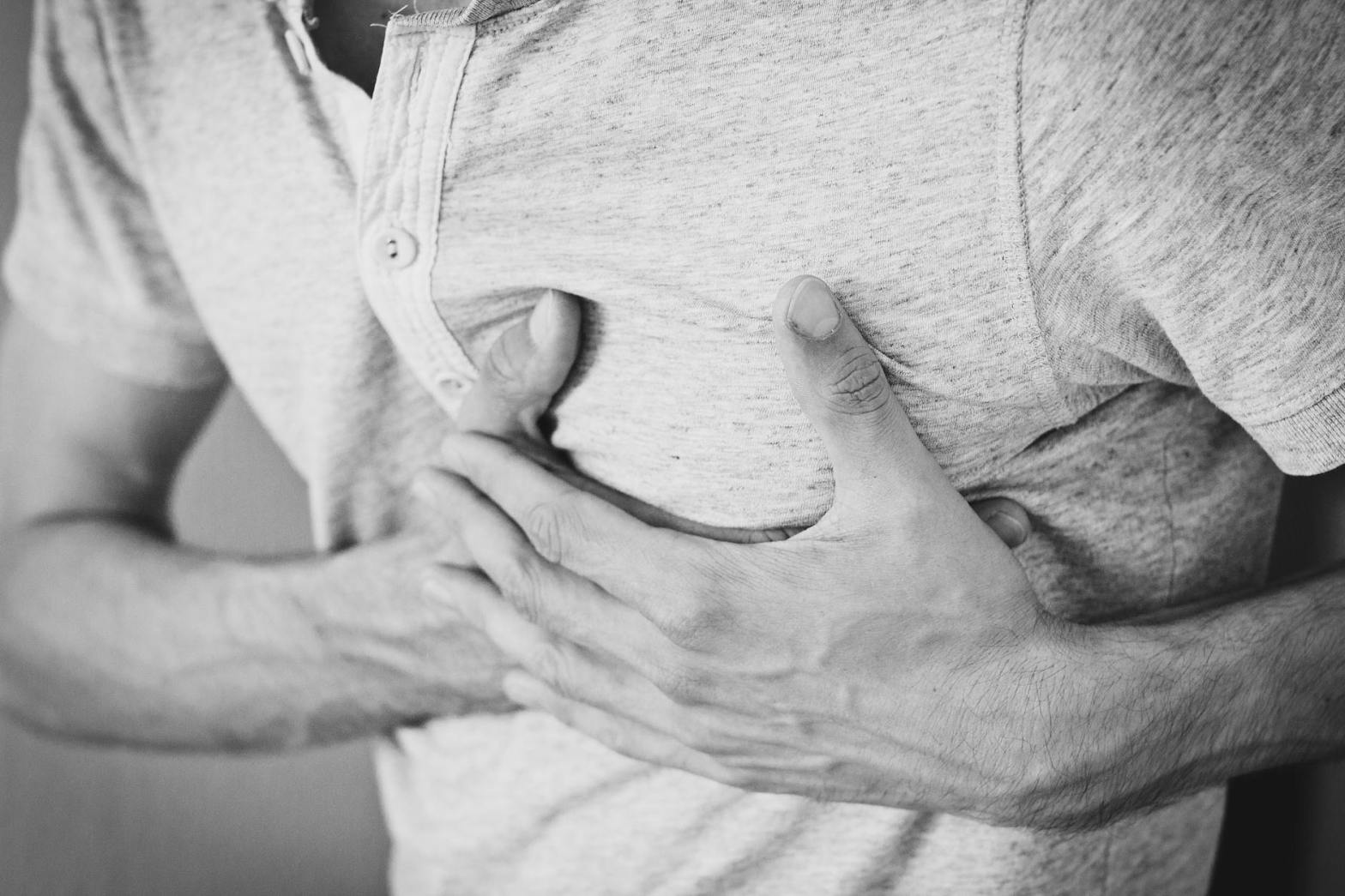
This symptom complex of ‘gastric cardia’ was first identified and described as a stand-alone syndrome in the early 1930’s, when Dr. Ludwig Roemheld identified the reflex heart symptomatology specifically caused by gastro-intestinal discomforts. Characterized by symptoms mimicking those of angina pectoris, the Roemheld syndrome is often mistaken for the former. As such the following afflictions are common to ‘RS’: Palpitation, arrhythmia (tachycardia), circulatory disorders, dizziness, dyspnea, and related states of fear and anxiety, panic attacks. Further symptoms associated with ‘RS’ are: Gastro-intestinal discomforts, trapped gas, nausea, hot flashes, sleep-disorders, syncope and tinnitus.
Ultimately the cause of the ‘syndrome’ is the development of gas in the digestive tract. This may be of varied origin and besides mal-nutrition, food-intolerance, indigestion, speaking while chewing and as such ‘swallowing’ air, may be caused by life-style factors such as stress, anger, or depression. Our sedentary work practice may play a role. We are accustomed to conduct most of our work sitting down, we engage in little physical exercise, eat rapidly and unhealthily, sooner or later such habits must make us ill. However there are also disease factors that promote Roemheld syndrome. IBS, irritable bowel syndrome, has been named as a potential adjunctive cause of ‘RS’, as has the existence of a hiatus hernia. Neural involvement of the vagus nerve has also been linked to the development of the ‘RS’ symptomatology. In this case sensory communication from the digestive tract to the brain is believed to impact the development of symptoms.
During an ‘attack’, the bloated gastro-intestinal tract displaces the organs in the thoracic cavity. To the patient there appears to be insufficient space in the chest. The bloated stomach and bowels push the lungs aside, generating pressure on the heart, causing anxiety, difficulty breathing, oppression, weakness, dizziness and faintness in the patient. The pulse rate increases, palpitation may appear and arrhythmia are triggered, in the form of tachycardia or extra systoles. It is not infrequent that these symptoms take a patient to see a cardiologist. However the causative factors of the presenting symptoms are often misinterpreted as originating from the heart itself.
In many cases the management of ‘RS’ can be achieved by altering dietary and lifestyle habits. As such, avoiding certain foods can alleviate symptoms and prevent ‘attacks’. Reducing alcohol and restricting the consumption of fizzy drinks, which promote fermentation in the bowels and thereby produce gas, can be helpful. Fast food, fatty meals, vegetables such as of the onion family, cabbage, pulses, pastry, and particularly white flour products should be avoided; such changes sooth the digestive activity of the stomach and bowels. However surgical intervention may be necessary where a hiatus hernia is identified as causative factor.
Conventional medicine suggests the administration of medication that reduces bloating, and inhibits the development of gas in the digestive tract. Yet this medical intervention is one that only palliates and does not remove the underlying cause. The issue remains and drug side-effects can produce consequential troubles in the long run. Acute alleviation can be achieved by herbal tea infusions with fennel, melissa, mint, juniper or black cumin. From a homeopathic perspective, remedies that aim at the removal of the digestive pathology and take into consideration the patient idiosyncratic cardiac symptomatology should be considered (gastro-cardia symptom complex).





















 Gentle Help