
‘Traumeel’ a complex prescription – efficacious for the treatment of sports-injuries

Traumeel is a homeopathic complex preparation indicated for use in the treatment of trauma and injuries contracted in the process of physical activity [1]. It matches, in a broader sense, the symptomatology that may result from the conduction sports.

Traumeel is one of the most extensively researched homeopathic formula [2]. Trials and studies investigating the efficacy of Traumeel came to conclude that it can in fact be described as the ‘Diclofenac’ of homeopathy [3]. It´s treatment effect, tolerability and compliance, have been found to be equivalent, if not superior to that with conventional non-steroidal anti-inflammatory drugs, as is for example ‘Diclofenac’ [4, 5, 6].

Traumeel is a protected brand, manufactured by Heel. It is a composition of 14 natural extracts that have been homeopathically potentised to decimal dilutions, or are included in the concoction as mother-tincture [7]. These components in combination are stronger than the single constituents when used separately [8]. Traumeel is marketed as a topical ointment or gel, injections, and for oral administration as drops or tablets. [8].

As a complex preparation Traumeel cannot be classed as a classic homeopathic medication. Complex formulations are designed to be prescribed in a generalized manner and do not follow the doctrine of individualization that is paramount in classical homeopathic prescribing. The aim of such poly-remedy prescribing is for the treatment compound to match the broad spectrum of symptomatology expressed for a specific condition [9].

Traumeel is used for the alleviation of limitations caused by pain and inflammation in muscular tissue and joints, and is as such indicated for musculoskeletal conditions that affect all major joints, the back, neck, foot, knee, arms etc.. The treatment with Traumeel is effective, gentle, and devoid of adverse effects [8].

References:

[1] Orchard, J., Best, T., Mueller-Wohlfahrt, H-W., Hunter, G., Hamilton, B., Webborn, N., Jaques, R., Kenneally, D., Budgett, R., Phillips, N., Becker, C. & Glasgow, P. (2008) ‘The early management of muscle strains in the elite athlete: best practice in a world with a limited evidence basis ‘, British Journal of Sports Medicine, 42(3), pp. 158-159 [Online]. Available at: doi:10.1136/bjsm.2008.046722 (Accessed: November 2009).

[2] Bemm, T. (2009) Leistungssteigerung mit der Homöopathie, Available at:http://www.aponeo.de/themenwelt/bewegung-und-sport/homoeopathie-im-sport/beitraege/leistungssteigerung-mit-der-homoeopathie/ (Accessed: April 2013).

[3]  DZS (2009) Individuell trainieren – Prof.Dr. P. Billigmann im Interview zum Thema Fussball, Available at: http://www.zeitschrift-sportmedizin.de (Accessed: March 2010).

[4]. Birnesser H, Oberbaum M, Klein P, Weiser M. (2004) The homeopathic preparation Traumeel S compared with NSAIDs for symptomatic treatment of epicondylitis. Journal of Musculoskeletal Research, 8(02n03),119-128 [Online]. Available at: doi: 10.1142/S0218957704001284 (Accessed November 2009).

[5]. Schneider C, Klein P, Stolt P, Oberbaum M. (2005) ‘A homeopathic ointment preparation compared with 1% Diclofenac gel for acute symptomatic treatment of tendinopathy’. Explore, 1(6), pp.446-452 [Online]. Available at: doi: 10.1016/j.explore.2005.08.010 (Accessed: November 2009).

[6] Gonzalez de Vega,C., Speed,C., Wolfarth, B., Gonzalez, J. (2013) ‘Traumeel vs. diclofenac for reducing pain and improving ankle mobility after acute ankle sprain: A multicentre, randomised, blinded, controlled and non-inferiority trial’, The International Journal of Clinical Practice, 67(10), pp. 979-989 [Online]. Available at: doi: 10.1111/ijcp.12219 (Accessed: January 2016).

[7] Heel (2009) Gebrauchsinformation Traumeel S, Available at:http://www.heel.de/upload/Traumeel_S_Tabl_K_014558_03_BPZ_7_1564.pdf(Accessed: January 2016).

[8] Heel (n.d.) Traumeel, Available at: http://www.traumeel.com/Traumeel-com-Home.html?ActiveID=10008080 (Accessed: January 2016).

[9] Pflüger (n.d.) Homöopathische Komplexmittel, Available at:http://www.homoeopathie.de/komplexmittel.html (Accessed: April 2013).

Homeopathy for superficial injuries to the skin
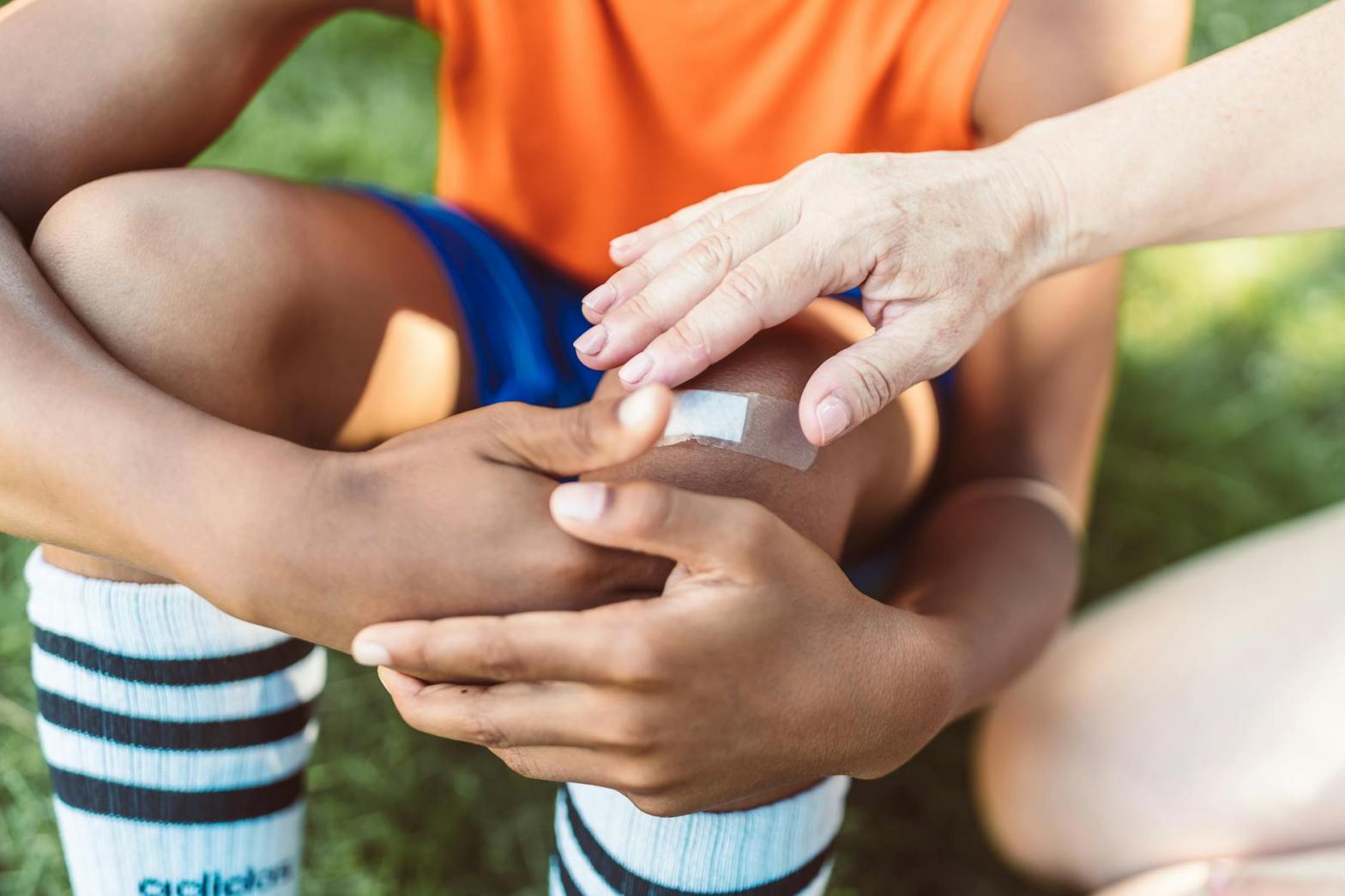
Injuries to the skin, where the damage is only superficial, can come from cuts, abrasions or chafing. While cuts are usually a direct impact to the skin, abrasions and chafing are a form of dermal inflammation.

Where skins injuries occur, abrasions, excoriations and chafing do not damage the skin deeper than the upper layer, the epidermis of the skin. Cuts may be deeper, penetrating into the deeper layers of the skin.

Superficial cuts and excoriations, depending on their severity, can cause redness, pain, itching or burning. In severer cases these wounds can bleed and may cause scarring when healing.

In avoidance of infection, the acute conventional treatment of such superficial skin injuries is to clean the wound, dry it and bandage it after the application of a topical anti-inflammatory product.

In order to clean the wound, a non-alcoholic calendula tincture can be used. Calendula is known to inhibit the bacterial growth in the affected area and has wound healing properties.

Topically- in the form of a cream, Calendula aids the recovery of wounds.

Internal administration of homeopathic remedies can be used to assist the healing process.

Calendula acts as a general wound healing remedy.

Hypericum can be used where the injury is a laceration wound and the nerve is affected.

Ledum is a remedy for punctured wounds.

Where inflammation has progressed, symptoms as heat in the affected area, redness, swelling and pain may occur. In such cases Hepar sulphuricum any Pyrogenicum may be remedies to consider.